
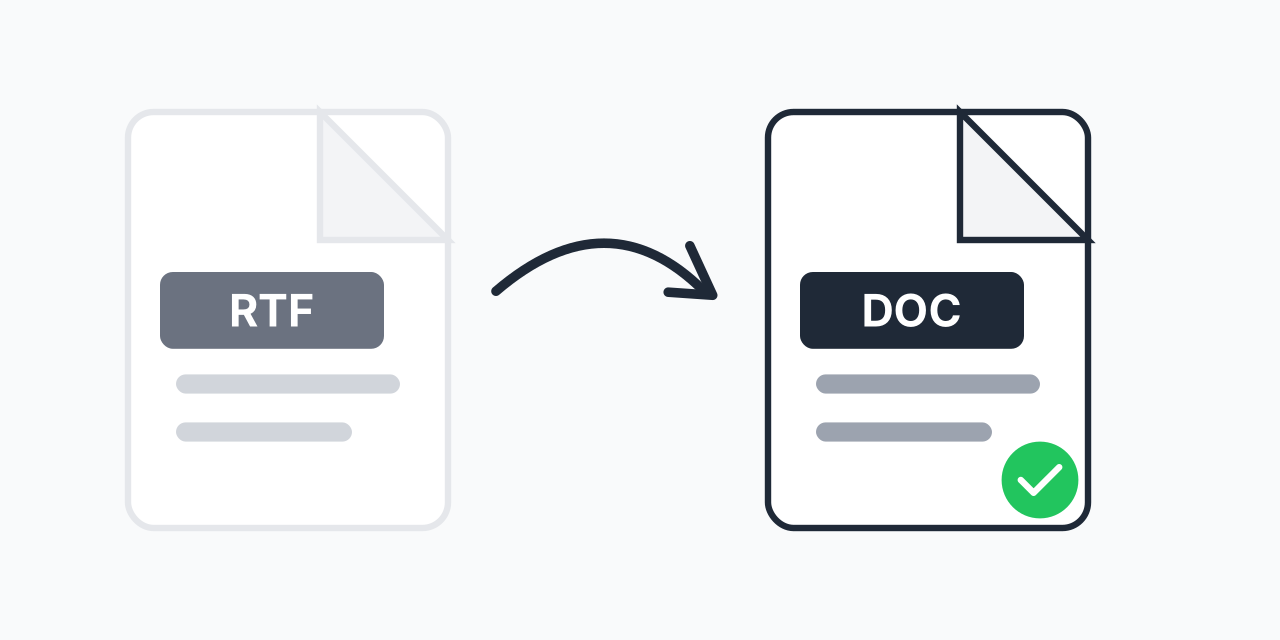
Why Convert RTF to DOC?
You have RTF files that need to work seamlessly with Microsoft Word or integrate into enterprise document workflows. While RTF files offer cross-platform compatibility, DOC format provides deeper integration with Word features and better recognition in business environments.
RTF (Rich Text Format) was developed by Microsoft in the 1980s as a universal document exchange format. Microsoft stopped updating RTF in 2008, making DOC the more practical choice for modern document workflows. In our testing, DOC files consistently perform better in corporate email systems and document management platforms that expect native Word formats.
How to Convert RTF to DOC
- Upload your RTF file - Drag and drop or click to select your Rich Text Format document
- Confirm DOC output - DOC is selected as your target Word format
- Download your Word file - Your document is ready for Microsoft Word
The entire process takes seconds. No software installation, no account creation, no waiting.
Formatting Preservation
Your document's appearance transfers intact during conversion. Text formatting, fonts, paragraph styles, headers, and basic tables all convert accurately to DOC format.
In our testing, standard business documents convert with 100% formatting fidelity. Complex RTF files with embedded images and tables also convert cleanly, though extremely elaborate layouts may require minor adjustments in Word after conversion.
RTF vs DOC: Key Differences
Both formats store formatted text, but they serve different purposes:
- File size - RTF files are typically 2-3 times larger than equivalent DOC files due to plain-text encoding
- Feature support - DOC handles complex elements like embedded macros, advanced styles, and revision tracking that RTF cannot preserve
- Software recognition - While RTF opens in many text editors, DOC is immediately recognized as a Word document by business systems
- Metadata - DOC stores author information, edit history, and document properties more comprehensively
For documents that will live within Microsoft Word ecosystems, DOC is the more capable format.
Common Use Cases
Legacy Document Migration
Organizations with archives of RTF files from older systems need to convert them for modern document management. Converting to DOC ensures these files integrate properly with SharePoint, Office 365, and other Microsoft-based platforms.
Enterprise System Compatibility
Many corporate document workflows, email systems, and approval processes specifically require DOC or DOCX format. RTF files may be rejected or display incorrectly in these systems.
Professional Document Submission
Job applications, legal filings, and business proposals often require Word format. Converting RTF to DOC ensures your documents are accepted without compatibility issues.
When to Choose DOCX Instead
If you are working with modern Microsoft Word (2007 or later), consider RTF to DOCX conversion instead. DOCX offers smaller file sizes, better compression, and is the current default format for Word documents. DOC is ideal when you need compatibility with older Word versions (97-2003) or legacy systems that specifically require the binary DOC format.
Works in Any Browser
Convert RTF to DOC directly in your web browser:
- Windows, Mac, Linux, Chromebook
- Chrome, Firefox, Safari, Edge
- Tablet and mobile devices
No downloads required. Your browser handles the conversion securely.