
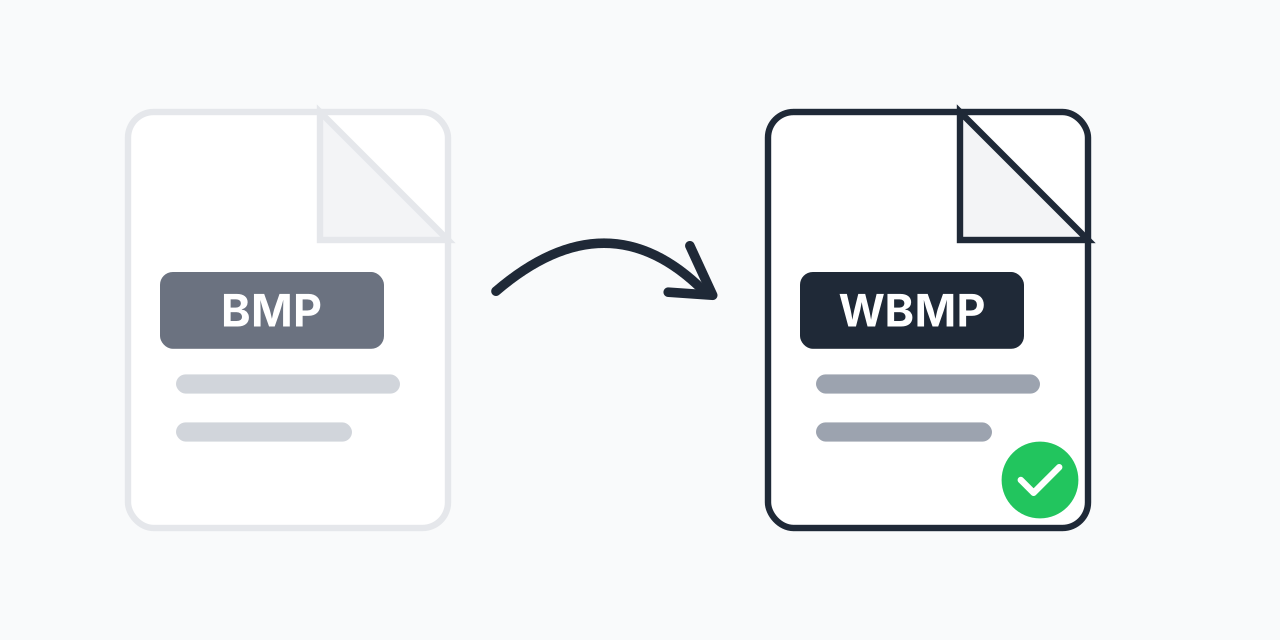
Need a Monochrome Image Format?
WBMP (Wireless Bitmap) is a specialized image format that displays only black and white pixels. While modern devices have moved on, WBMP remains relevant for legacy mobile systems, embedded displays, and specific industrial applications.
Converting your BMP files to WBMP reduces them to 1-bit monochrome images. This process is irreversible in terms of color data, but it creates extremely small files perfect for bandwidth-limited or memory-constrained environments.
How to Convert BMP to WBMP
- Upload your BMP file - Drag and drop or click to select your bitmap image
- Convert to WBMP - Our converter processes the image into monochrome format
- Download your WBMP - Get your wireless bitmap file ready for use
The conversion happens instantly in your browser. No software installation required, no accounts to create.
Understanding BMP vs WBMP
BMP (Bitmap) files can store images with millions of colors at various bit depths. WBMP files are radically different - they only support 1-bit color depth, meaning every pixel is either black or white.
- BMP - Full color support (up to 24-bit or 32-bit), larger file sizes, universal compatibility
- WBMP - Monochrome only (1-bit), extremely small file sizes, designed for wireless transmission
In our testing, a 100KB BMP image typically converts to a WBMP file under 5KB, depending on the image dimensions and content. This dramatic size reduction comes at the cost of all color and grayscale information.
When WBMP Makes Sense
Legacy Mobile Development
WBMP was the standard image format for early mobile phones using WAP (Wireless Application Protocol). If you maintain legacy systems or need to test on older devices, WBMP remains the required format.
Embedded Systems
Many embedded devices with monochrome LCD displays use WBMP or similar 1-bit formats. Industrial equipment, medical devices, and IoT sensors often have extremely limited memory and benefit from WBMP's tiny file sizes.
E-Ink and Low-Power Displays
Electronic paper displays and other low-power screens that show black and white content can efficiently render WBMP images without additional processing.
Line Art and Simple Graphics
Logos, icons, QR codes, and simple diagrams that are already essentially black and white convert to WBMP with minimal quality loss.
What to Expect from Conversion
When converting BMP to WBMP, the converter must reduce all colors to pure black or white. This process uses thresholding - pixels brighter than a certain value become white, and darker pixels become black.
Results vary based on your source image:
- High-contrast images - Convert cleanly with recognizable results
- Photographs - Lose most detail, may appear as abstract black and white shapes
- Text and line art - Convert well if the original has clear contrast
- Gradient images - Show harsh banding or lose detail entirely
For best results, consider adjusting your source BMP's contrast before conversion.
Alternative Formats to Consider
WBMP isn't the right choice for every situation. Consider these alternatives:
- BMP to PNG - For web use with full color and transparency support
- BMP to JPG - For photographs where you need smaller files but want to keep colors
- BMP to GIF - For simple graphics with limited colors, supports animation
Only use WBMP when you specifically need monochrome output for legacy or embedded systems.
Works on Any Device
Our BMP to WBMP converter runs entirely in your browser:
- Windows, Mac, Linux, Chromebook
- Chrome, Firefox, Safari, Edge
- Tablets and smartphones
No downloads, no plugins, no Java required. Your files stay on your device throughout the conversion process.