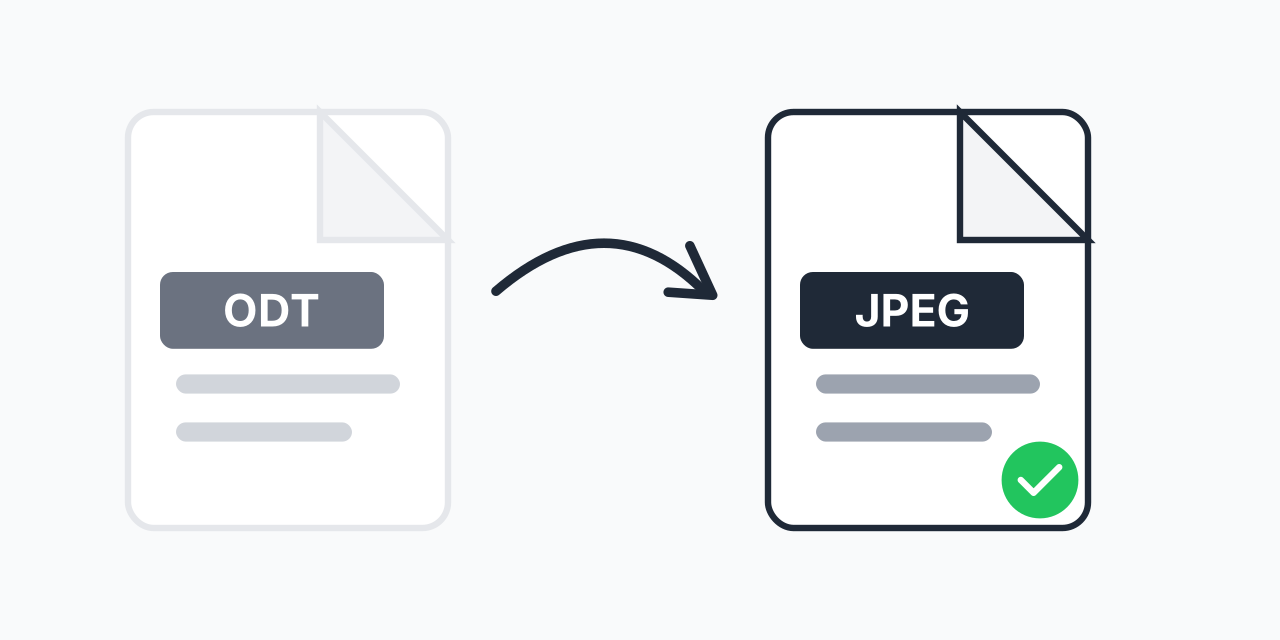
Need to Share a Document as an Image?
You have an ODT file from LibreOffice or OpenOffice, but the person you're sharing with doesn't have those programs installed. Or maybe you want to post document content on social media, embed it in a presentation, or preserve the exact layout without worrying about font issues.
Converting ODT to JPEG solves all of these problems. JPEG is universally viewable on every device, browser, and platform. No special software required to open it.
How to Convert ODT to JPEG
- Upload your ODT file - Drag and drop or click to select your OpenDocument text file
- Confirm JPEG output - JPEG is selected for maximum compatibility
- Download your image - Each page becomes a separate JPEG file
The entire process takes seconds. No account creation, no software installation.
Why Convert Documents to Images?
There are several practical reasons to turn ODT documents into JPEG images:
- Universal viewing - Recipients don't need LibreOffice or OpenOffice to see your content
- Presentation slides - Insert document content directly into PowerPoint or Google Slides
- Social media sharing - Post document excerpts as images on Instagram, Twitter, or LinkedIn
- Layout preservation - Fonts, formatting, and positioning stay exactly as you designed them
- Web publishing - Embed document visuals on websites without compatibility concerns
In our testing, JPEG conversion preserves text clarity well for most document types, though text-heavy documents with small fonts may benefit from ODT to PNG conversion for sharper results.
ODT vs JPEG: What Changes
Understanding the trade-offs helps you decide when this conversion makes sense:
| ODT (Source) | JPEG (Output) |
|---|---|
| Editable text document | Fixed image - no text editing |
| Requires LibreOffice/OpenOffice | Opens on any device |
| Searchable text | Text becomes pixels |
| Vector graphics stay sharp | Rasterized at set resolution |
| Multi-page document | One JPEG per page |
JPEG is ideal when you need visual sharing. If you need editable text, consider converting to DOCX format instead.
When to Use JPEG vs PNG
Both image formats work for document conversion, but they have different strengths:
Choose JPEG when:
- Your document contains photos or complex graphics
- File size matters (email attachments, web uploads)
- Slight compression artifacts are acceptable
Choose PNG when:
- Your document is mostly text with sharp edges
- You need perfect quality with no artifacts
- The document has transparent elements
For mixed content documents, JPEG typically offers the best balance of quality and file size.
Common Use Cases
Creating Presentation Handouts
Convert meeting notes or reports to JPEG images, then insert them into slides. The layout stays consistent regardless of what fonts are installed on the presentation computer.
Archiving Documents
JPEG provides a fixed visual record that won't change with software updates. What you see today is what you'll see in 20 years.
Sharing Without Software Hassles
Send a client or colleague a JPEG instead of asking them to install LibreOffice. They can view it immediately on any device.
Works in Any Browser
Our converter runs entirely in your browser:
- Windows, Mac, Linux, Chromebook
- Chrome, Firefox, Safari, Edge
- iPhone, iPad, Android tablets and phones
No downloads, no plugins, no Java. Just upload and convert.