Can't Share Your ODT File?
You created a document in LibreOffice or OpenOffice, but the person you're sending it to can't open it. They don't have the right software, or worse, they opened it in Word and the formatting is completely broken.
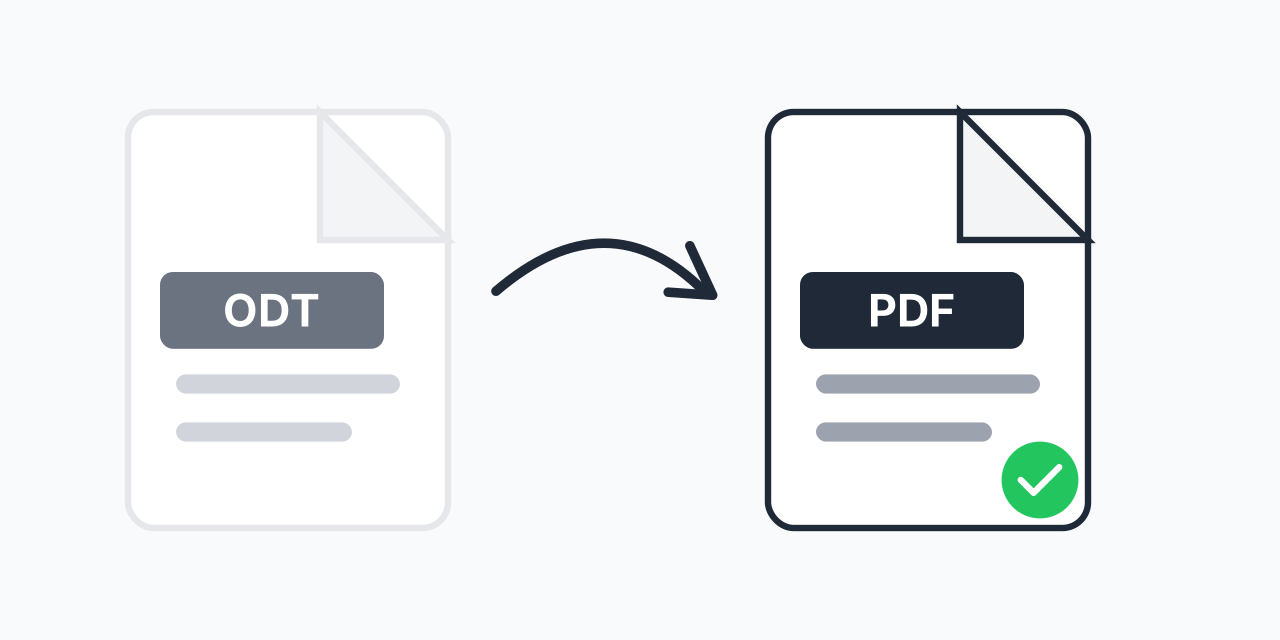
PDF solves this problem permanently. When you convert ODT files to PDF, the document looks identical on every device, every operating system, and every PDF reader. No more formatting surprises.
How to Convert ODT to PDF
- Upload your ODT file - Drag and drop or click to select your OpenDocument file
- Confirm PDF output - PDF is selected as your universal output format
- Download your PDF - Your document is ready to share with anyone
The entire process takes seconds. No account required, no software to install.
Why ODT Files Cause Problems
ODT (Open Document Text) is the native format for LibreOffice Writer, OpenOffice Writer, and other open-source word processors. While it's an excellent format based on open standards, it has compatibility challenges:
- Microsoft Office opens ODT differently - Fonts, spacing, and layouts often shift when opened in Word
- Mobile devices struggle - Most phones and tablets can't open ODT without special apps
- Web browsers can't display ODT - Recipients need to download the file and find software to open it
- Older systems lack support - Not everyone has modern office software installed
In our testing, the same ODT document displayed with noticeable formatting differences across Word, Google Docs, and LibreOffice. PDF eliminates this inconsistency entirely.
When to Use ODT to PDF
Sharing Professional Documents
Sending a resume, proposal, or report? Convert to PDF first. Hiring managers and clients expect documents that display correctly without any fuss.
Archiving Important Files
PDFs are ideal for long-term storage. The format has been an ISO standard since 2008 and will remain readable decades from now. Your document won't depend on any specific software version.
Preventing Accidental Edits
When you send an ODT, recipients can modify it. PDF creates a fixed document that preserves your exact content and layout.
Email Attachments
PDFs are universally accepted. You won't get replies asking "What do I open this with?" or complaints about missing fonts.
What Happens During Conversion
When you convert ODT to PDF, the converter reads your document structure and recreates it in the portable document format:
- Text and paragraphs - All content transfers exactly as written
- Formatting - Bold, italic, underline, font sizes, and colors are preserved
- Images and graphics - Embedded pictures maintain their quality and position
- Tables - Cell structures, borders, and alignment stay intact
- Page layout - Margins, headers, footers, and page breaks match your original
The resulting PDF is a faithful representation of your ODT document that anyone can view.
ODT vs PDF: Key Differences
Both formats have their place in document workflows:
- ODT is editable - Keep the ODT version when you need to make changes
- PDF is fixed - Use PDF for final distribution and archiving
- ODT is open source - Based on the ODF standard, not controlled by any company
- PDF is universal - Every computer, phone, and tablet can display PDFs
Best practice: Save your working file as ODT, then export to PDF for sharing. If you need to convert the other way, try PDF to ODT conversion.
Works in Any Browser
Our ODT to PDF converter runs entirely in your web browser:
- Windows, Mac, Linux, and Chromebook
- Chrome, Firefox, Safari, and Edge
- iPhone, iPad, and Android devices
No plugins, no downloads, no waiting. Convert documents from any device with internet access.