ChangeMyFile - Free Online File ConverterChangeMyFile
Trusted by thousands of users worldwide

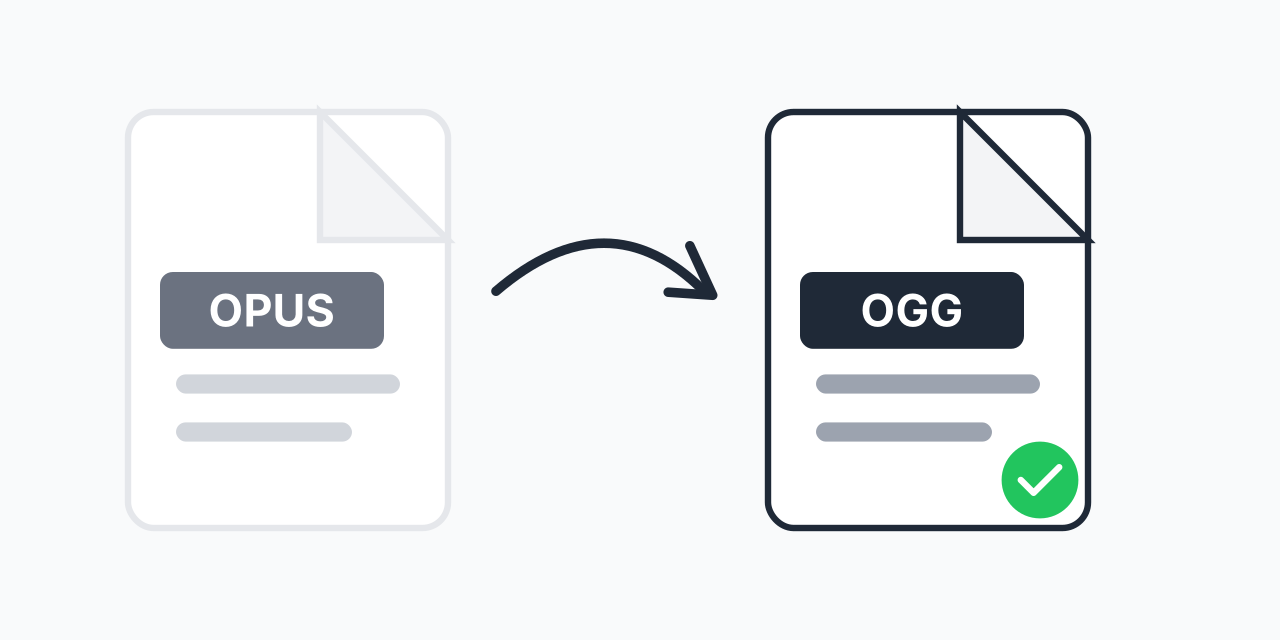
Convert OPUS to OGG - Universal Audio Compatibility

Transform OPUS files to OGG for wider player and device support.

Step 1: Upload your files

You can also Drag and drop files.

Step 2: Choose format
Step 3: Convert files

Read Terms of use before using

Share:fXin@
500+ Formats
Lightning Fast
100% Secure
Always Free
Cloud Processing

Why Convert OPUS to OGG?

You have an OPUS file but your audio player, car stereo, or media software does not recognize it. While OPUS offers excellent compression, many older devices and applications only support the more established OGG Vorbis format.

Converting OPUS files to OGG solves this compatibility gap. Both formats belong to the open-source Xiph.Org ecosystem, but OGG Vorbis has been around since 2000 while OPUS only arrived in 2012. That decade of head start means OGG enjoys broader support across players, devices, and software.

How to Convert OPUS to OGG

  1. Upload your OPUS file - Drag and drop or click to select your audio file
  2. Select OGG output - Choose OGG Vorbis as your target format
  3. Download converted file - Get your OGG file ready for any player

The entire process happens in your browser. No software installation, no account creation, no waiting.

OPUS vs OGG: Understanding the Difference

This conversion involves two related but distinct audio technologies:

  • OPUS - A newer codec optimized for both speech and music, used in Discord, WhatsApp, and WebRTC applications
  • OGG Vorbis - An established codec designed specifically for music with excellent quality at mid-to-high bitrates

In our testing, both formats deliver comparable quality at similar bitrates. OPUS edges ahead at very low bitrates (under 64 kbps), while OGG Vorbis performs slightly better for high-fidelity music above 192 kbps. For most practical uses, the difference is negligible.

The real advantage of converting to OGG is compatibility. If you need an alternative format, OPUS to MP3 offers even wider device support, though with less efficient compression.

When to Convert OPUS to OGG

Media Player Compatibility

Many standalone audio players and older media software recognize OGG but not OPUS. Converting ensures playback without codec installation hassles.

Archiving Audio Collections

If you are building a music library with consistent formatting, OGG provides a standardized open format that has proven its longevity over two decades.

Gaming and Creative Projects

Game engines and audio editing software often have native OGG support. Converting OPUS files simplifies asset integration.

Portable Device Playback

Older MP3 players and car audio systems that support OGG may not handle OPUS. Converting ensures your files play everywhere.

Quality Considerations

Since both OPUS and OGG are lossy formats, converting between them involves re-encoding. We use high-quality settings to minimize any generational loss.

For critical audio work, consider converting your original source to OPUS to WAV first if you need an uncompressed intermediate format. However, for everyday listening, direct OPUS to OGG conversion sounds excellent.

Works in Any Browser

Convert OPUS to OGG from any device:

  • Windows, Mac, Linux, Chromebook
  • Chrome, Firefox, Safari, Edge
  • iPhone, iPad, Android tablets and phones

No plugins required. All processing happens locally in your browser for fast, private conversion.

Pro Tip

Both OPUS and OGG support metadata tagging. If your OPUS file has embedded album art, artist info, or track details, these transfer to the OGG output during conversion.

Common Mistake

Converting OPUS files at very low bitrates and expecting high-fidelity output. If your source OPUS is encoded at 32 kbps, converting to OGG will not improve quality. Always start with the highest quality source available.

Best For

Users with OPUS recordings from Discord, voice apps, or web downloads who need to play them on older media players, car stereos, or audio software that supports OGG but not OPUS.

Not Recommended

If your device already plays OPUS natively, there is no need to convert. OPUS is actually more efficient than OGG Vorbis at lower bitrates, so keep files as OPUS when compatibility is not an issue.

Frequently Asked Questions

OPUS is a newer audio codec (2012) optimized for low-latency streaming and voice. OGG Vorbis is an older codec (2000) designed for music. OGG has broader player compatibility, while OPUS offers better compression at low bitrates.

There is minimal quality loss when converting between these formats at reasonable bitrates. Both are efficient lossy codecs. We use high-quality encoding settings to preserve audio fidelity during conversion.

OGG provides better audio quality than MP3 at the same file size, and both are open formats. Choose OGG when your target device supports it. Choose MP3 only when you need maximum device compatibility.

Yes. Upload multiple OPUS files and convert them all to OGG in a single batch. No need to process files one at a time.

OPUS files typically come from voice recordings, Discord downloads, WhatsApp voice messages, YouTube audio extraction, and podcast recordings. It is increasingly used for streaming and communication applications.

Yes, completely free. No registration, no watermarks, no limits on file size or number of conversions. The converter runs in your browser with no strings attached.

No installation required. The converter works entirely in your web browser. Just upload your OPUS file and download the OGG result.

OGG plays on most modern media players including VLC, Foobar2000, Winamp, and many Android devices natively. Some car stereos and portable players also support OGG. Apple devices need third-party apps.

No. Conversion happens entirely in your browser using local processing. Your audio files never leave your device, ensuring complete privacy.

Quick access to the most commonly used file conversions.