Have Old Phone Videos With Audio You Need?
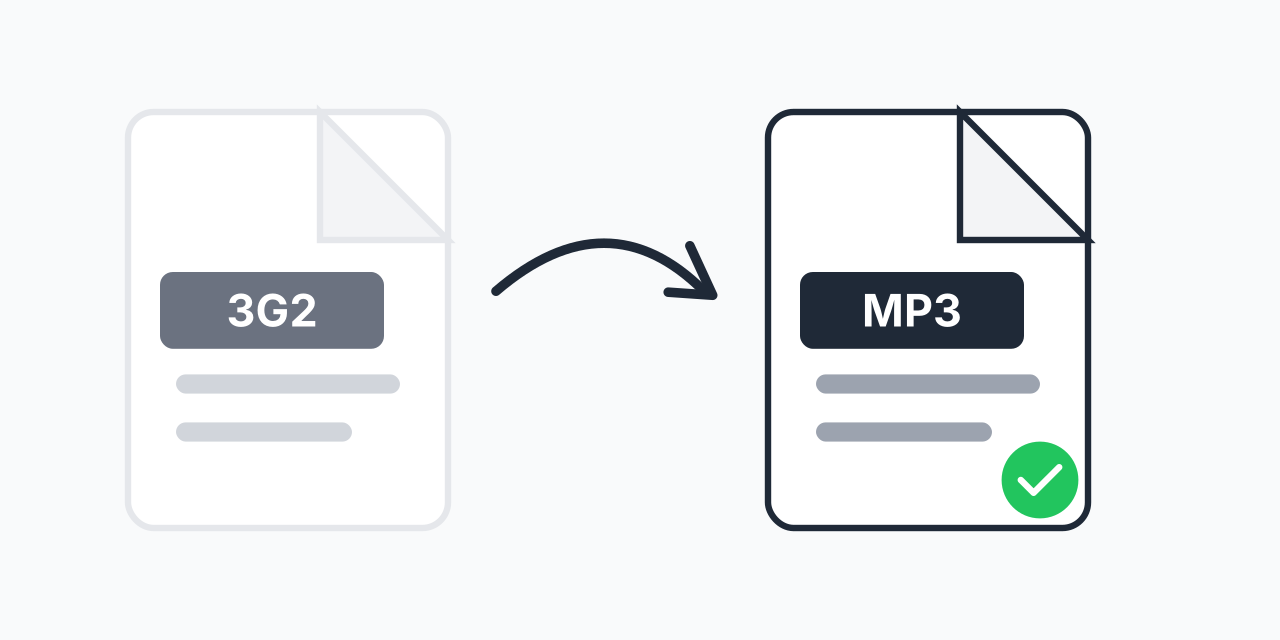
3G2 files are video recordings from CDMA mobile phones popular in the early 2000s-Verizon, Sprint, and other carriers used this format. These files often hold irreplaceable audio: voicemails, first words, interviews, or memorable conversations that you want to preserve and share.
The problem? 3G2 files don't play on most modern devices, and they're bulky video files when you only need the audio. Converting to MP3 extracts just the sound and creates a file that plays on literally everything-smartphones, computers, car stereos, old iPods, and any device with audio playback.
How to Convert 3G2 to MP3
- Upload your 3G2 file - Drag and drop your old mobile video or click to select from your device
- Confirm MP3 output - MP3 ensures universal compatibility across all devices and platforms
- Download your audio - Get your extracted MP3 file ready for any player or sharing platform
No software installation, no account creation.
Technical Details: 3G2 and MP3 Formats
Understanding what happens during conversion helps you know what to expect from your audio files.
- 3G2 audio codecs - EVRC, QCELP, SMV, VMR-WB (optimized for voice on CDMA networks)
- 3G2 sample rates - Typically 8-16 kHz for voice recordings from older phones
- MP3 specifications - Supports bitrates from 32-320 kbps, sample rates up to 48 kHz
- MP3 compatibility - Works on 99%+ of audio devices manufactured in the last 30 years
- File size reduction - Extracted MP3 audio is typically 10-20x smaller than the original video file
3G2 files were designed for mobile phone transmission efficiency, while MP3 became the universal standard for portable audio. Converting bridges these two eras of technology.
Why Choose MP3 for Audio Extraction?
Works on Everything
MP3 is the most compatible audio format ever created. Your extracted audio plays on modern smartphones, vintage iPods, car CD players with MP3 support, USB drives in any car stereo, portable Bluetooth speakers, and even decade-old MP3 players gathering dust in a drawer.
Easy to Share
Email the audio to family members without worrying if their devices support it. Upload to any website, social platform, or messaging app. MP3 is universally accepted where audio upload is available.
Efficient File Sizes
A 10-second clip becomes roughly 150-300KB. A minute of extracted audio ranges from 1-2MB depending on bitrate settings. These small files are easy to store, share, and back up.
No Quality Loss Beyond Source
Since 3G2 phone recordings were already compressed voice audio (typically 8-16 kHz), converting to 128 kbps MP3 preserves all audible detail from the original recording.
Common Uses for 3G2 to MP3 Conversion
Archiving Voice Memories
Old voicemails, grandparents' voices, children's first words-these irreplaceable audio moments deserve preservation. MP3 format ensures they'll play on future devices for decades to come.
Creating Shareable Clips
Extract a funny moment or memorable quote from an old video. MP3 files attach to emails, text messages, and social posts without compatibility issues.
Car Audio Playback
Want to listen to old recordings during your commute? MP3 works with USB drives in car stereos, burned CDs, and Bluetooth connections. Your old phone videos become road-trip audio.
Podcast and Video Editing
Incorporate vintage recordings into modern projects. MP3 imports directly into Audacity, GarageBand, Adobe Audition, and virtually any audio or video editing software.
MP3 vs AAC: Which Format Should You Choose?
Both are excellent choices for extracting audio from 3G2 files, but they have different strengths:
- Choose MP3 when: Maximum compatibility is your priority, using car stereos or older devices, sharing with people who may have varied technology
- Choose AAC when: Using primarily Apple devices, want slightly better quality at same file size, staying within modern device ecosystems
For legacy phone recordings, MP3's universal compatibility typically outweighs AAC's marginal quality advantage. If you prefer AAC, try our 3G2 to AAC converter.
What to Expect from Old Phone Audio
Setting realistic expectations helps you understand your converted files:
- Voice clarity - Phone calls and voice memos will sound like phone quality, clear for speech but not studio-grade
- Frequency range - Early phone recordings captured 300 Hz to 3.4 kHz (telephony band), so music will sound thin
- Background noise - Hiss, compression artifacts, and ambient noise from the original recording remain
- Faithful extraction - Our converter preserves exactly what's in your original file without degradation
Converting to MP3 won't enhance poor-quality audio, but it makes that audio accessible on any device you own.
Keep the Video? Consider Alternatives
If the visual content matters too, extracting audio-only removes the video permanently. Consider these options:
- Full video conversion - Our 3G2 to MP4 converter preserves both video and audio in a modern format
- Audio-only extraction - Use this 3G2 to MP3 converter when you only need the sound
- Both formats - Convert to MP4 for archival, then extract MP3 for easy sharing
Audio extraction makes sense when you want small, shareable files or when the video content isn't important.
Batch Convert Multiple 3G2 Files
Have a folder full of old phone recordings? Upload multiple 3G2 files at once and extract MP3 audio from the entire batch. Perfect for archiving years of phone videos into a compact audio library. Process ten files as easily as one.
Works on Any Device
Our browser-based converter runs anywhere with an internet connection:
- Windows, Mac, Linux, Chromebook
- Chrome, Firefox, Safari, Edge
- iPhone, iPad, Android tablets and phones
No software to download, no plugins to install, no account to create. Just upload, convert, and download your MP3 files.