Stuck with Old Phone Videos That Modern Devices Ignore?
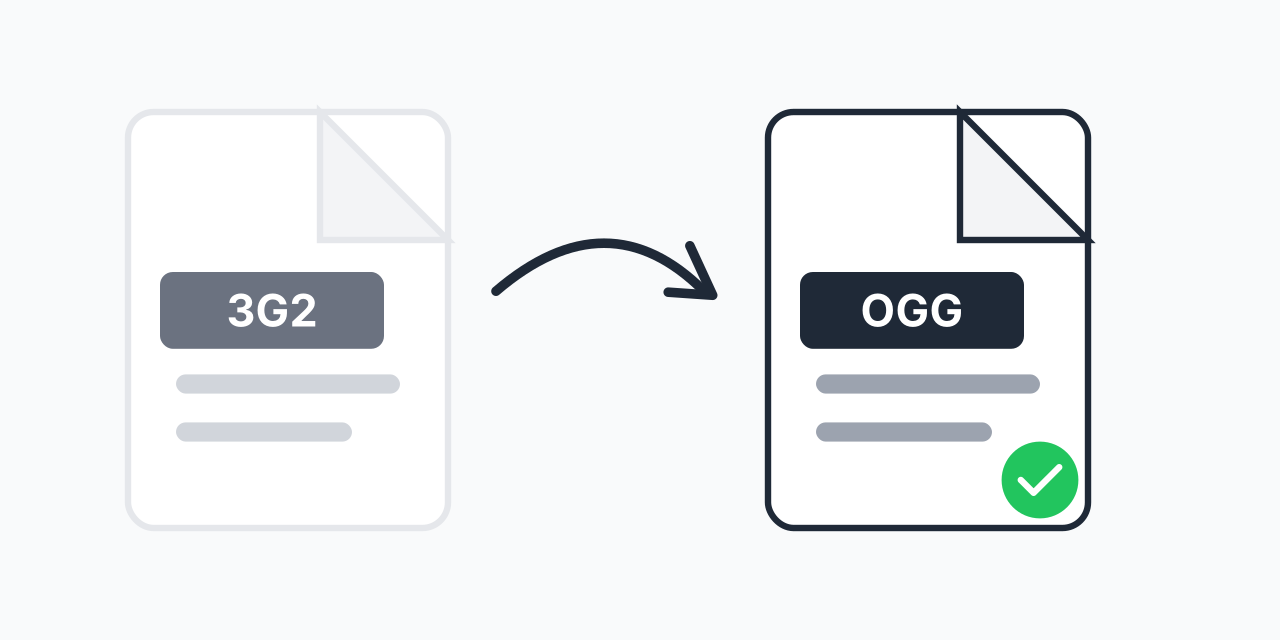
3G2 files from early CDMA phones contain audio in codecs like EVRC and QCELP that most modern devices simply cannot play. Whether you recorded voice memos, captured family moments, or saved phone conversations, that audio is trapped in an obsolete format.
Converting to OGG Vorbis liberates your audio with a format that delivers better sound quality than MP3 at the same file size. OGG is the audio format trusted by Spotify for streaming and supported by modern browsers, media players, and game engines worldwide.
How to Convert 3G2 to OGG
- Upload your 3G2 file - Drag and drop your old mobile video or click to browse your files
- Confirm OGG output - OGG Vorbis provides efficient compression with excellent audio fidelity
- Download your audio - Get your extracted audio ready for any modern player or project
No software installation, no account creation.
Understanding 3G2 and OGG Formats
3G2 (3GPP2) is a multimedia container developed for CDMA mobile networks like Verizon and Sprint. The audio inside uses voice-optimized codecs that prioritize clarity over frequency range. OGG Vorbis, by contrast, is a modern open-source audio codec designed for high-quality compression.
- 3G2 audio codecs - EVRC, EVRC-B, QCELP, SMV, VMR-WB (8-16 kHz voice-band optimization)
- OGG Vorbis bitrates - Typically 64-320 kbps, with quality matching MP3 at half the bitrate
- OGG frequency response - Preserves up to 19 kHz at 128 kbps (comparable to 256 kbps MP3)
- File size savings - OGG produces smaller files than MP3 at equivalent perceived quality
While 3G2 files were efficient for early mobile networks, OGG represents the modern standard for open-source audio compression with superior efficiency.
Why Choose OGG Over Other Audio Formats?
Superior Compression Efficiency
In our testing, a 128 kbps OGG file sounds comparable to a 256 kbps MP3. This means your extracted audio files are half the size without sacrificing quality. For voice recordings from old phones, this efficiency is particularly valuable since the source quality is already limited.
Open-Source and Royalty-Free
Unlike MP3 (historically patent-encumbered) or AAC (Apple-focused), OGG Vorbis is completely open-source. Game developers, podcasters, and web developers often prefer OGG because there are no licensing concerns.
Modern Platform Support
Every major browser supports OGG natively-Chrome, Firefox, Edge, and Opera play OGG audio without plugins. VLC, Winamp, foobar2000, and most Linux media players handle OGG files perfectly.
Streaming Quality Standard
Spotify uses OGG Vorbis for its streaming service, proof that the format delivers premium audio quality. When you convert to OGG, you are using the same technology that powers millions of daily streams.
Real Uses for 3G2 to OGG Conversion
Web Development Audio
Building a website with audio elements? OGG is natively supported by HTML5 audio tags. Extract audio from old phone recordings and embed them directly in web pages without transcoding or compatibility issues.
Game Development Assets
Unity, Godot, and many game engines prefer OGG for audio assets due to its compression efficiency and open licensing. Convert old voice recordings or sound effects for use in your projects.
Podcast Recovery
Interview audio from an old phone makes for authentic podcast content. OGG compresses voice exceptionally well, and editing software like Audacity handles OGG files natively.
Linux and Open-Source Workflows
If you use Linux or prefer open-source tools, OGG integrates seamlessly with your workflow. No proprietary codecs needed, no compatibility workarounds required.
OGG vs MP3 vs AAC: Which Format Fits Your Needs?
All three are lossy audio formats, but each has distinct advantages:
- Choose OGG when: File size matters, using web projects, working in open-source environments, or targeting modern browsers
- Choose MP3 when: Maximum device compatibility is critical, using older car stereos, or sharing with non-technical users
- Choose AAC when: Targeting Apple devices primarily, using iTunes/Apple Music, or creating iPhone ringtones
For web use and modern workflows, OGG provides the best balance of quality and file size. Need universal compatibility instead? Try our 3G2 to MP3 converter or 3G2 to AAC converter for Apple devices.
Audio Quality Expectations from 3G2 Files
Before converting, understand what you are working with:
- Source sample rates - CDMA phone audio was typically recorded at 8-16 kHz
- Voice optimization - Original codecs prioritized speech clarity over full-range audio
- Conversion preserves quality - We extract and transcode without additional degradation
- Realistic expectations - Converted audio will sound like phone recordings, not studio recordings
Converting to OGG ensures these voice recordings play on modern devices, but cannot enhance quality beyond what was originally captured.
Keep the Video? Consider Alternatives
If you want to preserve both video and audio from your 3G2 file, audio extraction might not be what you need. Our 3G2 to MP4 converter maintains the video while upgrading to a modern container format.
For audio-only needs, OGG extraction is far more efficient. A 5MB video file might produce just a 200-400KB audio file, saving significant storage space.
Batch Convert Multiple Files
Have a collection of old 3G2 recordings from an archived phone? Upload multiple files and extract OGG audio from all of them simultaneously. Perfect for processing folders of legacy mobile recordings for web projects or audio archives.
Works on Any Device
Extract audio from 3G2 files using any modern browser:
- Windows, Mac, Linux, Chromebook
- Chrome, Firefox, Safari, Edge
- iPhone, iPad, Android tablets
No software downloads, no plugins required. Just upload, convert, and download your OGG audio files.