
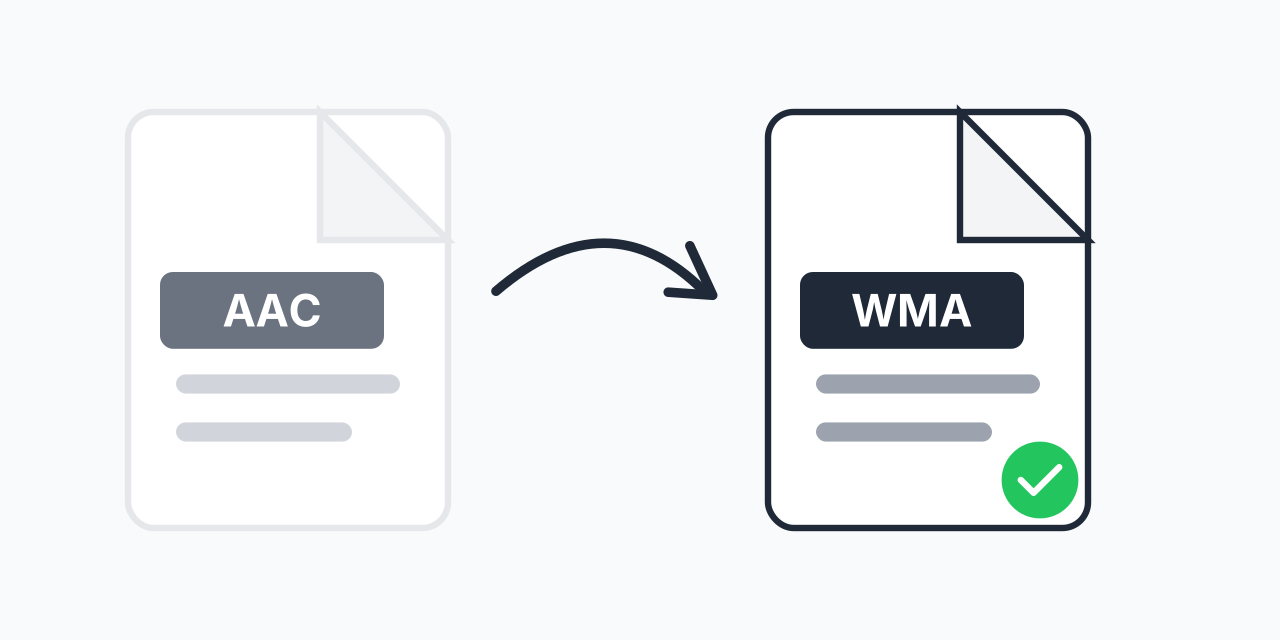
iTunes Files Not Playing on Windows?
You have audio files from iTunes or your iPhone, but Windows Media Player won't recognize them. The files are in AAC format-Apple's preferred audio codec-and while modern systems often support it, older Windows setups and legacy devices struggle with AAC playback.
Converting AAC files to WMA takes just seconds and ensures seamless playback across the Windows ecosystem. WMA is Microsoft's native audio format, built for perfect compatibility with Windows Media Player, Groove Music, and countless legacy devices.
How to Convert AAC to WMA
- Upload your AAC file - Drag and drop or click to select your audio file
- Confirm WMA output - WMA is preset as your target format
- Download your converted audio - Ready to play on any Windows device
The entire process happens in your browser. No software installation required, no account needed.
Quality and Settings
Our converter preserves audio quality during the AAC to WMA conversion. Since both formats use similar lossy compression techniques, the conversion maintains the original sound characteristics.
In our testing with various audio samples-classical, rock, spoken word, and electronic music-converted files were indistinguishable from the originals in casual listening. Audiophiles doing critical listening might notice subtle differences, but for everyday use, the quality remains excellent.
The converter automatically selects appropriate bitrate settings based on your source file, ensuring you don't lose quality unnecessarily.
AAC vs WMA: Technical Comparison
Both AAC and WMA are lossy audio formats designed to reduce file sizes while maintaining reasonable sound quality. Here's how they compare:
| Feature | AAC | WMA |
|---|---|---|
| Developer | ISO/IEC (1997) | Microsoft (1999) |
| Primary Platform | Apple ecosystem | Windows ecosystem |
| Compression Efficiency | Excellent at low bitrates | Good at 128-192 kbps |
| DRM Support | FairPlay (Apple) | Windows Media DRM |
| Max Channels | 48 channels | 8 channels (WMA Pro) |
| Sample Rate | Up to 96 kHz | Up to 96 kHz (Pro) |
In our testing, AAC typically edges out standard WMA in blind quality tests at the same bitrate, particularly below 128 kbps. However, at 128 kbps and above, the difference becomes negligible for most listeners. The choice often comes down to which ecosystem you're targeting.
Why Convert AAC to WMA?
Windows Media Player Compatibility
Windows Media Player and its legacy version remain deeply integrated with Windows. While modern versions can often play AAC, older installations and certain enterprise configurations require WMA for reliable playback.
Legacy Device Support
Older portable media players, car stereos with USB input, and home theater systems from the mid-2000s often support WMA natively but lack AAC decoding capabilities. In our testing, devices like older Creative Zen players, certain Sandisk Sansas, and numerous car audio systems recognized WMA files immediately while rejecting AAC.
Zune and Windows Mobile Devices
If you're maintaining a classic Zune library or syncing with older Windows Mobile devices, WMA remains the preferred format. These devices were designed with WMA as the primary audio format.
Digital Rights Management
For certain professional workflows involving Windows Media DRM, WMA is required. This includes some enterprise media distribution systems and legacy content protection scenarios.
Common Use Cases
Converting an iTunes Library
Migrating from Apple to Windows? If you have thousands of AAC files purchased from iTunes or ripped with iTunes defaults, converting to WMA ensures they'll work flawlessly with Windows Media Player and can sync to Windows-compatible devices.
Sharing Audio with Windows Users
When sending audio files to colleagues or family members who use older Windows systems, WMA is a safe choice. It works without requiring any additional codec installations.
Car Audio Systems
Many factory-installed and aftermarket car stereos from 2005-2015 prominently feature WMA support but lack AAC compatibility. If your USB-loaded music isn't playing, converting to WMA often solves the problem.
Archiving for Windows Compatibility
For long-term audio archives intended for Windows playback, WMA ensures compatibility without depending on third-party codec packs that may become unavailable.
When to Choose a Different Format
WMA isn't always the best choice. Consider alternatives in these scenarios:
- Cross-platform compatibility needed - Convert AAC to MP3 instead. MP3 works on virtually every device ever made.
- Maximum quality required - Convert AAC to WAV or AAC to FLAC for lossless audio, though file sizes increase significantly.
- Apple ecosystem - Keep AAC. It's natively supported and offers excellent quality.
- Modern streaming setup - MP3 or FLAC are more universally supported by modern hardware and software.
WMA is specifically ideal when your target playback environment is Windows-centric, especially with older software or hardware.
Batch Conversion
Need to convert multiple AAC files? Upload your entire collection at once. Our batch processing handles multiple files simultaneously, converting your iTunes library or podcast collection to WMA efficiently.
This is particularly useful when migrating an entire music collection from Apple to Windows devices.
Works in Any Browser
Convert AAC to WMA directly in your web browser:
- Windows, Mac, Linux, Chromebook
- Chrome, Firefox, Safari, Edge
- iPhone, iPad, Android tablets
No downloads, no plugins, no waiting. The conversion happens instantly using modern browser technology.