
Still Using DOC Files from the 2000s?
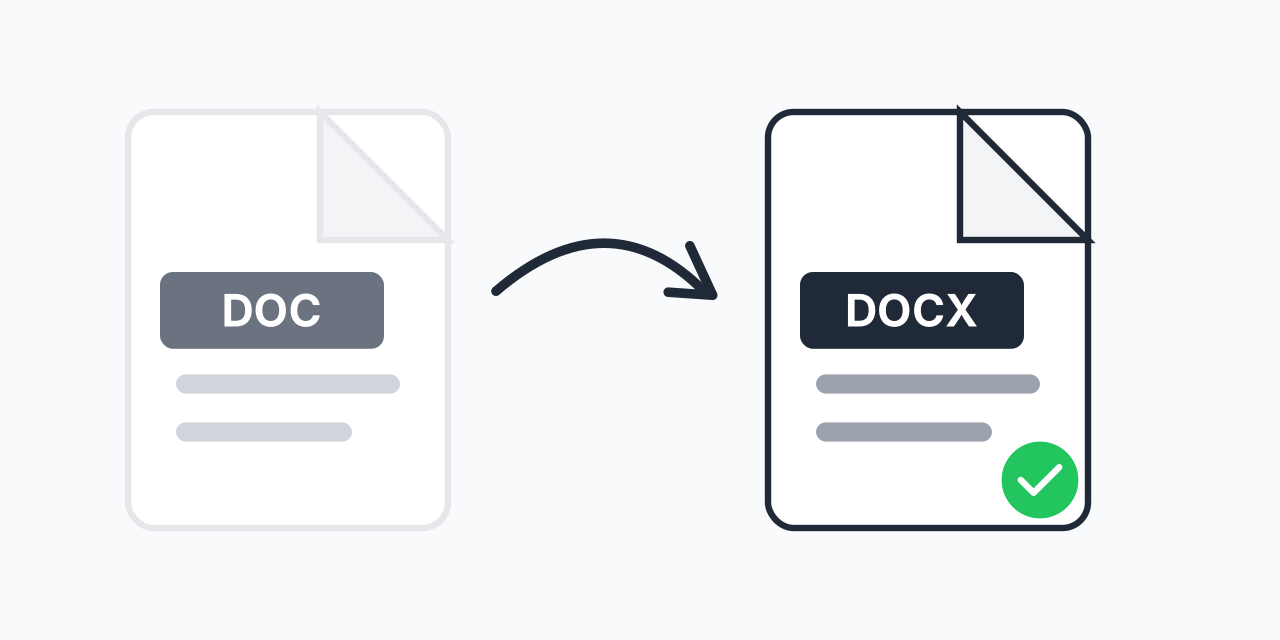
If you have DOC files created before 2007, they're running on technology that's nearly two decades old. Microsoft replaced the binary DOC format with XML-based DOCX in 2007 for good reason-better security, smaller file sizes, and improved compatibility across platforms.
Converting DOC to DOCX takes seconds and brings your documents into the modern era. Whether you're archiving old files, sharing documents with colleagues, or simply want better protection against corruption, DOCX is the format you need.
How to Convert DOC to DOCX
- Upload your DOC file - Drag and drop or click to select your legacy Word document
- Confirm DOCX output - DOCX is pre-selected as the modern replacement format
- Download your file - Get your modernized document ready to use anywhere
No Microsoft Word required. No account signup. Just upload, convert, and download.
What Gets Preserved During Conversion
When you convert DOC to DOCX, all your content transfers intact:
- Text and formatting - Fonts, sizes, bold, italic, underline, colors
- Page layout - Margins, headers, footers, page breaks
- Images and graphics - Embedded photos, clipart, charts
- Tables - Cell structure, borders, shading
- Lists - Numbered and bulleted items with proper indentation
- Hyperlinks - URLs and internal document links
In our testing with documents from Word 2000 and Word 2003, formatting preserved accurately. Complex layouts with multiple columns and text boxes also converted without issues.
Why DOC Files Need Upgrading
The DOC format served Microsoft Word from 1997 to 2003, but it comes with significant limitations that create problems today:
- Security vulnerabilities - DOC files can embed macros that execute code, making them a favorite target for malware and viruses. In our testing, security software flags DOC files more frequently than DOCX
- Larger file sizes - DOC uses an uncompressed binary format. The same document saves approximately 50% smaller as DOCX
- Corruption risk - Binary file structure makes DOC files harder to recover when damaged
- Limited cross-platform support - Modern apps like Google Docs and Apple Pages handle DOCX better than legacy DOC
DOCX isn't just newer-it's genuinely better in every measurable way.
DOC vs DOCX: Technical Comparison
| Feature | DOC (1997-2003) | DOCX (2007+) |
|---|---|---|
| File Structure | Binary (single file) | XML (compressed ZIP archive) |
| Maximum Size | 512 MB | 32 MB (rarely needed) |
| Typical File Size | Larger | ~50% smaller |
| Macro Security | Macros allowed (virus risk) | No macros (.docm for macros) |
| Data Recovery | Difficult if corrupted | Easier XML-based recovery |
| Cross-Platform | Limited support | Google Docs, Pages, LibreOffice |
| Modern Features | No SmartArt, limited graphics | Full modern Word support |
In our testing, DOCX files open faster and more reliably across different applications. The XML structure means even partially corrupted files can often be salvaged.
Common Scenarios for DOC to DOCX Conversion
Archiving Legacy Documents
Your company has thousands of DOC files from the early 2000s. Converting them to DOCX future-proofs the archive and reduces storage space by roughly half. If you need to convert multiple documents, you can upload batches for faster processing.
Sharing with Modern Teams
You received an old DOC file but your team uses Google Docs or Microsoft 365 online. While these services can open DOC files, DOCX provides cleaner formatting and fewer compatibility warnings.
Security Compliance
Many organizations now block DOC attachments in email due to macro virus risks. Converting to DOCX removes the security concern while preserving your document content.
Opening Files Without Microsoft Word
DOCX works seamlessly in LibreOffice, Apple Pages, and web-based editors. If you're on Linux or prefer free software, DOCX is better supported than legacy DOC.
When to Keep DOC Format
There are rare situations where DOC remains necessary:
- Word 2003 or earlier - If recipients only have Word 97-2003, they need DOC (though a free compatibility pack exists)
- Macro functionality - If your DOC contains macros you need, convert to DOCM instead of DOCX to preserve them
- Legal or regulatory requirements - Some contracts or filings may specifically require original format preservation
For nearly all modern use cases, DOCX is the better choice. Even Microsoft encourages conversion in newer Word versions.
Alternative Conversions
Depending on your needs, other formats might serve you better:
- DOC to PDF - When you need a fixed layout that can't be edited, ideal for sharing final documents
- DOC to TXT - Extract plain text without formatting for data processing or simple viewing
- DOC to ODT - Convert to OpenDocument format for maximum open-source compatibility
DOCX remains the best choice when you need to continue editing in Word or Word-compatible applications.
Works on Any Device
Our converter runs entirely in your browser:
- Windows, Mac, Linux, Chromebook
- Chrome, Firefox, Safari, Edge
- Tablets and smartphones
No software to install, no plugins required. Your DOC files stay on your device throughout the conversion process-nothing gets uploaded to external servers.