
ChangeMyFile - Free Online File ConverterChangeMyFile
Trusted by thousands of users worldwide

Convert JPG to PNG – Transparency and Lossless Quality

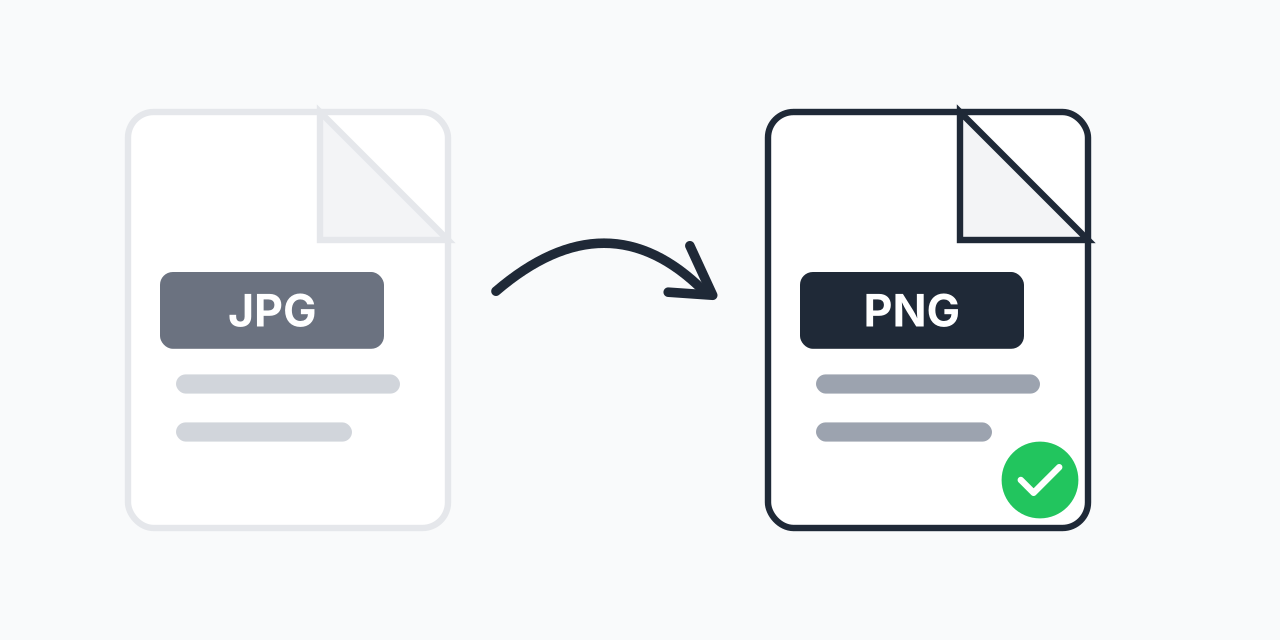
Convert JPG to PNG for transparency support and lossless editing.

Step 1: Upload your files

You can also Drag and drop files.

Step 2: Choose format
Step 3: Convert files

Read Terms of use before using

500+ Formats
Lightning Fast
100% Secure
No Sign-up Required
Cloud Processing
Always Free

Need PNG Format for Your Images?

PNG offers things JPG can't: transparency support and lossless quality. If you need transparent backgrounds, plan to edit an image multiple times, or want to prevent further quality loss, PNG is the right format.

Converting JPG to PNG switches your image to lossless format. While the quality already in your JPG is preserved, future edits won't add compression artifacts.

How to Convert JPG to PNG

  1. Upload your JPG file – Select your photo or image
  2. Confirm PNG output – PNG provides lossless compression
  3. Download your file – Get your PNG ready for editing or use

Conversion happens in your browser—fast and private.

Why Convert JPG to PNG?

Adding Transparency

JPG doesn't support transparency. If you need to remove the background or create transparent areas, convert to PNG first. Then use an image editor to make portions transparent.

Lossless Editing

Each time you edit and save a JPG, quality degrades. PNG doesn't lose quality when saved. For images you'll edit multiple times, PNG prevents accumulating artifacts.

Sharp Graphics

PNG preserves sharp edges better than JPG. For logos, text, screenshots, and graphics, PNG avoids the blurriness JPG can introduce.

Future Flexibility

PNG is a safer archiving format. You can always convert PNG to JPG later, but the reverse loses quality. Starting with PNG keeps options open.

Quality Expectations

Important: Converting JPG to PNG doesn't improve quality. The image data JPG compression removed is gone permanently. What you get:

  • Same visual quality as the source JPG
  • Larger file size (PNG is less compressed)
  • No further degradation when editing
  • Transparency capability for future use

File Size Difference

PNG files are typically larger than JPG:

  • Photo JPG (500KB) → PNG (1-3MB)
  • Graphics/screenshot (200KB JPG) → PNG (150-400KB)

The larger size reflects PNG's lossless nature. For final web delivery, you might convert back to JPG.

Batch Convert Multiple Images

Preparing images for a design project? Upload multiple JPG files and convert them all to PNG in one batch.

Works on Any Device

Convert JPG to PNG in your browser:

  • Windows, Mac, Linux, Chromebook
  • Chrome, Firefox, Safari, Edge
  • iPhone, iPad, Android

How to convert JPG to PNG

Convert JPG into PNG for lossless images.

How to convert JPG to PNG
1

Upload your JPG file

Click Upload and select your JPG file from your device.

2

Confirm PNG as output

The PNG format is auto-selected for this page—confirm it (or choose if needed). PNG supports transparency.

3

Convert and download

Click Convert Now and download your PNG file. Check transparency. Note: File size may be larger.

Tip: Convert JPG posters into PNG for websites.

Expert Tips for JPG to PNG

Pro Tip

Convert to PNG before doing any Photoshop or design work. Edit in PNG, and only export to JPG as the absolute final step. This prevents quality loss from multiple JPG saves.

Common Mistake

Converting JPG to PNG expecting improved image quality. PNG preserves the existing quality but cannot restore what JPG compression removed.

Best For

Preparing images for design work, adding transparent backgrounds, preserving graphics with sharp edges, and archiving images you'll edit repeatedly.

Not Recommended

Don't use PNG for sharing photos online—files are too large. Convert to PNG for editing, but export final versions as JPG for web and email.

Frequently asked questions

No. The quality lost during JPG compression cannot be recovered. PNG preserves what exists in the JPG without further degradation. The visual quality remains the same.
PNG uses lossless compression while JPG uses lossy compression. Lossless requires more data to store. The larger size is the cost of quality preservation and transparency support.
First convert to PNG, then use an image editor (Photoshop, GIMP, Canva) to remove the background. PNG will preserve the transparency; JPG cannot.
Different tools for different jobs. PNG is better for graphics, transparency, and editing. JPG is better for photos and when file size matters. Use both appropriately.
For editing, yes. For final delivery and sharing, JPG is usually better (smaller files). Use PNG during editing, export to JPG for distribution.
Yes. PNG prints well, especially for graphics and images with sharp edges. For photographs, print shops often prefer JPG or TIFF.
PNG supports transparency, preserves sharp edges, and doesn't degrade with repeated editing. For design workflows, these advantages outweigh the larger file sizes.
No. The image will look identical. Converting changes the format and adds transparency capability, but doesn't alter the visual appearance.