
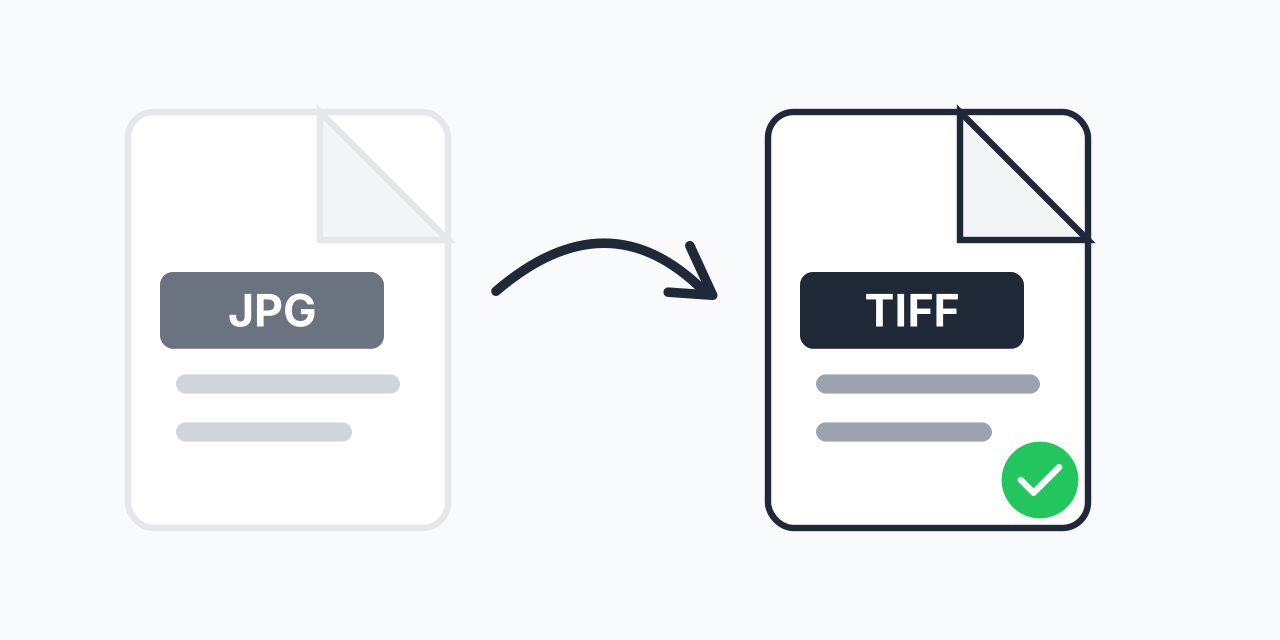
Why Convert JPG to TIFF?
Your JPG photos look fine on screen, but print shops often request TIFF files. Professional publishers and archivists prefer TIFF because it preserves image quality without the compression artifacts that JPG introduces over time.
TIFF (Tagged Image File Format) is the gold standard for professional printing and long-term image storage. Unlike JPG files that lose quality each time they're saved, TIFF uses lossless compression that keeps every pixel intact. When you need print-ready files or archival-quality images, TIFF is the format professionals trust.
How to Convert JPG to TIFF
- Upload your JPG file - Drag and drop or click to select your image
- Select TIFF as output - Choose TIFF for lossless, print-ready quality
- Download your TIFF - Your file is ready for printing, publishing, or archiving
The entire process happens in your browser. No software installation, no account creation, no waiting.
JPG vs TIFF: Understanding the Difference
JPG and TIFF serve different purposes. JPG was designed for web use and file sharing where small file sizes matter. TIFF was built for professional workflows where quality cannot be compromised.
| Feature | JPG | TIFF |
|---|---|---|
| Compression | Lossy (quality loss) | Lossless (no quality loss) |
| File Size | Small | Larger |
| Color Depth | 8 bits per channel | Up to 32 bits per channel |
| Editing | Degrades with each save | No degradation on re-save |
| Print Quality | Acceptable | Professional grade |
| Layers Support | No | Yes |
In our testing, converting a high-resolution JPG to TIFF preserved all visible detail while providing a format that print shops and publishers prefer. The larger file size is the tradeoff for guaranteed quality preservation.
When to Use TIFF Format
Professional Printing
Print shops request TIFF files because they need the highest possible quality. Whether you're printing posters, fine art reproductions, or marketing materials, TIFF ensures colors remain accurate and details stay sharp. For professional printing, 300 DPI resolution is the standard, and TIFF handles this requirement perfectly.
Publishing and Graphic Design
Book publishers, magazine editors, and graphic designers work with TIFF files daily. The format supports CMYK color space used in commercial printing and retains all metadata needed for production workflows. If you're submitting images to a publisher, TIFF is often required.
Archival and Preservation
Museums, libraries, and organizations that preserve historical images choose TIFF for long-term storage. Unlike JPG, which degrades when repeatedly opened and saved, TIFF maintains perfect quality indefinitely. For important photos you want to preserve for decades, TIFF is the safest choice.
Photography Post-Processing
Professional photographers often convert their final edited JPGs to TIFF before delivery. This creates a master file that won't degrade if the client needs to make further adjustments. The TIFF becomes the archival copy while JPGs serve for web and email use.
What Our Converter Preserves
When you convert JPG to TIFF with our tool, we maintain everything possible from your original image:
- Full resolution - Every pixel from your original JPG
- Color accuracy - No color shifts or banding
- Metadata - EXIF data, camera information, dates
- Aspect ratio - No cropping or distortion
In our testing, images converted from JPG to TIFF showed identical visual quality to the source file, now stored in a format that won't degrade with future editing or saving. The TIFF output uses efficient compression that balances quality with reasonable file sizes.
Batch Conversion for Multiple Files
Have dozens of JPGs that need converting? Upload them all at once. Our batch processing handles multiple files simultaneously, converting your entire collection to TIFF format in one session. This is especially useful for photographers preparing client deliverables or designers prepping images for a print project.
When to Choose a Different Format
TIFF isn't always the right choice. Here's when you might want something else:
- Web use - Keep JPG for websites, social media, and email attachments. TIFF files are too large for web delivery.
- Transparency needed - If you need a transparent background, consider JPG to PNG conversion instead.
- Limited storage - TIFF files can be 5-10 times larger than JPGs. If storage is tight, only convert files you truly need in TIFF format.
- Quick sharing - For sending photos via messaging apps or email, JPG remains more practical.
Use TIFF when quality matters most. Use JPG when file size and compatibility are priorities.
Technical Details
TIFF (Tagged Image File Format) was developed in 1986 by Aldus Corporation, now part of Adobe Systems. It has become the industry standard for professional imaging because of its flexibility and quality preservation.
Key technical advantages of TIFF:
- Lossless LZW compression - Reduces file size without quality loss
- High bit depth - Supports up to 32 bits per color channel for professional color work
- Layer support - Can store multiple layers for complex editing workflows
- CMYK support - Native support for print color spaces
- Metadata preservation - Stores extensive image information
Professional print workflows typically require 300 DPI resolution with images in either RGB or CMYK color space. TIFF handles both, making it the universal format for print production.
Works on Any Device
Our JPG to TIFF converter runs entirely in your browser:
- Windows, Mac, Linux, Chromebook
- Chrome, Firefox, Safari, Edge
- iPhone, iPad, Android tablets and phones
No software to install, no plugins required. Upload your JPG, download your TIFF. Your files never leave your device during conversion, ensuring complete privacy.