What is EPS?
EPS (Encapsulated PostScript) is a vector graphics file format developed by Adobe in 1987. It was created for professional printing and design workflows, allowing designers to embed graphics in documents that would print at any size without quality loss.
EPS files use Adobe's PostScript language to describe images mathematically, making them resolution-independent. A logo saved as EPS can be printed on a business card or a billboard with identical sharpness.
While EPS was the industry standard for decades, it's now considered a legacy format. Adobe stopped developing it in 1992 (version 3.0 was the last update). Modern workflows use PDF, AI, or SVG instead-but EPS files still circulate widely from stock image sites, older design archives, and client deliverables.
Why Convert EPS Files?
EPS creates real problems for anyone without professional design software:
- Can't open without Illustrator - Most computers can't preview EPS files natively. You need Adobe Illustrator, CorelDRAW, or similar software
- Outdated format - EPS hasn't been updated since 1992. Modern formats like PDF and SVG offer better features
- Web incompatibility - Browsers can't display EPS files at all. You must convert to PNG, JPG, or SVG for web use
- Email preview issues - Recipients often see a broken icon or low-quality preview instead of the actual image
- Office software limitations - Word, PowerPoint, and Google Docs have limited or no EPS support
- Printing confusion - Modern printers often prefer PDF over EPS for reliable output
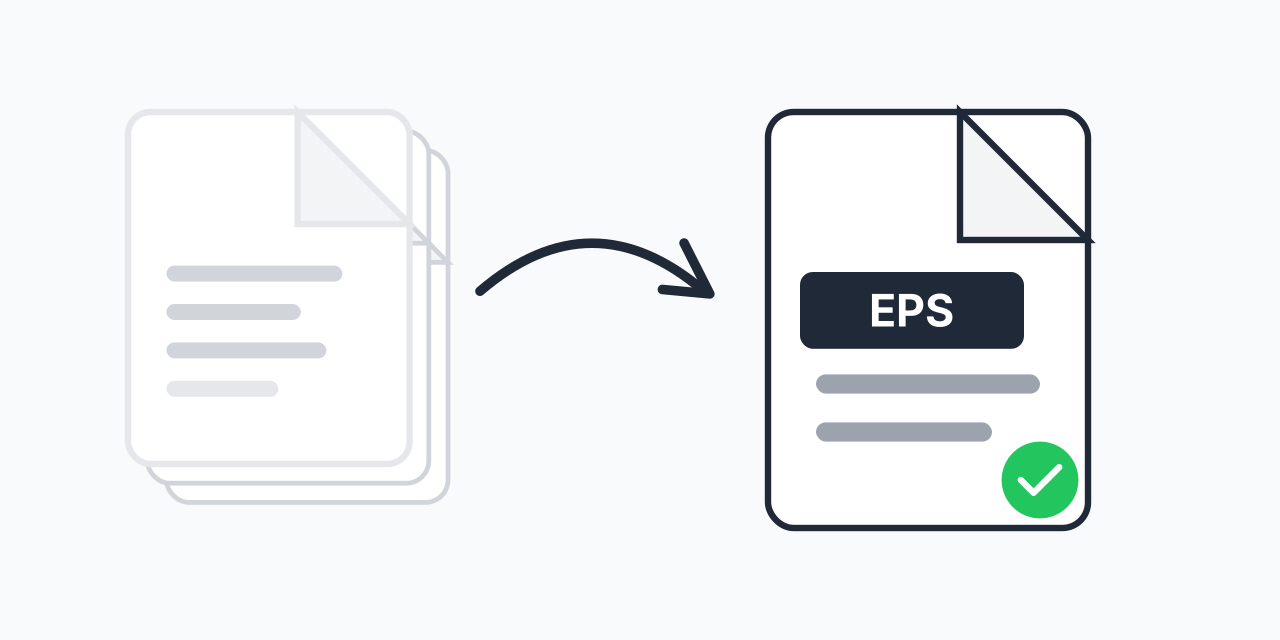
Converting EPS to a modern format makes files accessible to everyone, not just designers with expensive software.
Convert EPS to Other Formats
Choose the right output based on how you'll use the file:
EPS to PNG
Best for logos, graphics, and images with transparency. PNG preserves crisp edges and supports transparent backgrounds. Ideal for websites, presentations, and documents where you need to overlay the graphic on different backgrounds.
EPS to JPG
Best for photos and images where transparency isn't needed. JPG creates smaller files than PNG. Good for email attachments, social media, and general sharing.
EPS to PDF
Best for printing and document sharing. PDF is the modern replacement for EPS in print workflows. Anyone can open it, and vector quality is preserved for professional printing.
EPS to SVG
Best for web developers and modern design workflows. SVG is an open vector format that works in all browsers. Ideal for logos and icons that need to scale on responsive websites.
EPS to AI
If you need to edit the vector artwork, converting to Adobe Illustrator format preserves editability. Use this when you need to modify the design, not just view it.
Convert Other Formats to EPS
Converting to EPS is rarely needed today, but some legacy workflows still require it:
PDF to EPS
Some older print shops or RIP (Raster Image Processor) systems specifically request EPS. If your printer asks for EPS, you may need to convert from PDF.
AI to EPS
When sharing Illustrator files with clients or partners who use older design software like CorelDRAW or Quark, EPS provides better compatibility than native AI format.
SVG to EPS
Legacy publishing software like older versions of QuarkXPress may require EPS. Converting SVG to EPS ensures compatibility with these systems.
EPS Technical Specifications
- Full name: Encapsulated PostScript
- Developer: Adobe Systems (1987)
- Latest version: 3.0 (1992) - no longer updated
- File extension: .eps, .epsf
- MIME type: application/postscript, application/eps
- Type: Vector graphics (can include embedded raster images)
- Color models: RGB, CMYK, grayscale, spot colors
- Based on: PostScript page description language
EPS Compatibility
Software That Opens EPS
- Adobe Illustrator (full editing)
- Adobe Photoshop (rasterizes to bitmap)
- CorelDRAW
- Inkscape (free, open-source)
- Affinity Designer
- GIMP (rasterized preview only)
- macOS Preview (basic viewing)
What Can't Open EPS
- Web browsers (no native support)
- Windows Photos app
- Microsoft Office (limited/broken support)
- Google Docs/Slides
- Most mobile apps
- Social media platforms
If you don't have design software, converting EPS to PNG or PDF is the fastest way to view and use the file.
How to Convert EPS Files
- Upload your EPS file - Drag and drop or click to browse. We accept single files or batch uploads for multiple EPS conversions.
- Choose your output format - Select PNG for web graphics with transparency, JPG for photos, PDF for printing, or SVG for modern vector use.
- Download your converted file - Get a universally-viewable file that opens on any device without special software.
No Illustrator license needed. Conversion happens in your browser instantly.
EPS vs Modern Vector Formats
How EPS compares to current alternatives:
- EPS vs PDF: PDF has replaced EPS for print. PDF is universally viewable, more compact, and actively developed. Use PDF unless specifically asked for EPS.
- EPS vs SVG: SVG is the web-native vector format. It works in browsers, is lighter weight, and is the standard for responsive web design. Use SVG for anything online.
- EPS vs AI: AI (Adobe Illustrator) is better for editing and collaboration. AI files preserve layers, effects, and editability that EPS can't handle.
EPS remains useful only for legacy compatibility. For new projects, use PDF for print and SVG for web.
Batch Convert Multiple EPS Files
Have a folder of EPS files from a stock image purchase or client delivery? Upload them all at once and convert to your preferred format in a single operation. Perfect for designers preparing assets for web use or converting legacy archives to modern formats.