
ChangeMyFile - Free Online File ConverterChangeMyFile
Trusted by thousands of users worldwide

Convert HDR to HTML - Embed High Dynamic Range Images for Web

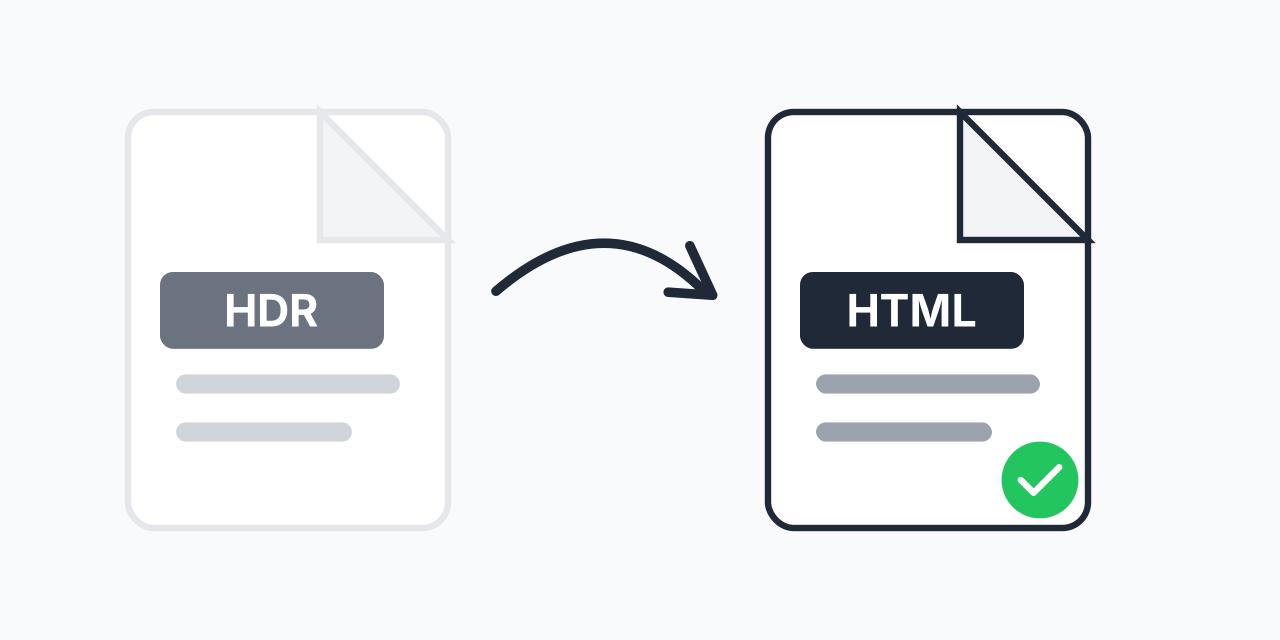
Transform Radiance HDR images into embeddable HTML documents instantly.

Step 1: Upload your files

You can also Drag and drop files.

Step 2: Choose format
Step 3: Convert files

Read Terms of use before using

Share:fXin@
500+ Formats
Lightning Fast
100% Secure
Always Free
Cloud Processing

Why Convert HDR to HTML?

HDR (High Dynamic Range) files from Radiance lighting simulations and 3D rendering software store incredible lighting detail that standard image formats lose. But these specialized files cannot display directly in web browsers or documents.

Converting HDR files to HTML creates a self-contained document that embeds your image data for easy sharing, archiving, or web publishing. The resulting HTML file displays consistently across all browsers without requiring special software or plugins.

How to Convert HDR to HTML

  1. Upload your HDR file - Drag and drop or click to select your Radiance HDR image
  2. Select HTML as output - Choose HTML format for web-ready embedded output
  3. Download your HTML - Get your converted file ready for browsers and documentation

The entire process happens in your browser. No software installation required.

Understanding HDR Files

HDR files use the RGBE format (Red, Green, Blue, Exponent) developed by Greg Ward for the Radiance lighting simulation system. Each pixel stores a shared exponent alongside RGB values, enabling storage of brightness levels from near-black to extremely bright light sources.

In our testing, HDR files from architectural visualization and product rendering workflows converted reliably to HTML format. The conversion process tone-maps the high dynamic range data to standard display range while preserving important visual detail.

Common uses for HDR files include:

  • Architectural visualization - Lighting studies and rendering output
  • 3D rendering - Environment maps and image-based lighting
  • Photography - HDR photography intermediate files
  • VFX production - High-precision image data for compositing

When to Use HTML Output

HTML output works well for specific scenarios:

  • Documentation - Embed converted HDR images in project documentation
  • Email sharing - Send as attachment that opens in any browser
  • Archival - Create standalone files that need no special viewer
  • Web publishing - Include in websites without special plugins

For standard image use, consider HDR to JPG for photos or HDR to PNG for graphics requiring transparency.

Browser Compatibility

Our converter works entirely in your browser:

  • Chrome, Firefox, Safari, Edge - all supported
  • Windows, Mac, Linux, Chromebook
  • iPhone, iPad, Android devices

Your files process locally without uploading to external servers.

Pro Tip

When sharing HDR files with clients or team members who lack specialized software, HTML output provides instant viewability in any browser. The embedded image displays consistently regardless of the recipient's operating system or installed applications.

Common Mistake

Expecting HTML output to preserve the full HDR dynamic range. HTML conversion applies tone mapping to fit standard display capabilities. For applications requiring the original HDR data, keep the source file and use HTML only for preview or documentation.

Best For

Creating documentation of HDR assets, sharing previews with non-technical stakeholders, and archiving HDR images in a universally accessible format that works on any device.

Not Recommended

Do not use HTML output if you need the actual image file for editing or uploading to platforms. Choose JPG or PNG format instead for those purposes.

Frequently Asked Questions

HDR (High Dynamic Range) files, specifically Radiance RGBE format, store images with an extended brightness range. They are commonly used in 3D rendering, architectural visualization, and lighting simulation where precise lighting data matters.

Converting to HTML creates a self-contained document that displays your image in any web browser. This is useful for sharing with colleagues who do not have HDR viewing software, creating documentation, or archiving images in a universally accessible format.

The conversion applies tone mapping to compress HDR brightness levels to standard display range. While the extreme dynamic range is reduced, important visual detail is preserved. For most documentation and sharing purposes, the quality is excellent.

Yes. Upload multiple HDR files and convert them all to HTML in a single batch operation. Each file produces its own HTML document.

HDR files come from Radiance lighting software, 3D applications like Blender and 3ds Max, HDR photography software, and professional rendering engines. They are also used as environment maps in game development.

No. The conversion happens entirely in your browser using local processing. Your files never leave your device, ensuring privacy and faster conversion times.

HTML output embeds the image in a document viewable in browsers. JPG output creates a standard image file. Use HTML for documentation and sharing as self-contained files. Use JPG when you need an image file for editing or uploading to websites.

Yes. The resulting HTML file opens in any modern web browser on any operating system. No special software or plugins are required to view it.

Radiance HDR files typically use .hdr, .pic, .rgbe, or .xyze extensions. All these formats use the same RGBE encoding and convert the same way.

Quick access to the most commonly used file conversions.