
ChangeMyFile - Free Online File ConverterChangeMyFile
Trusted by thousands of users worldwide

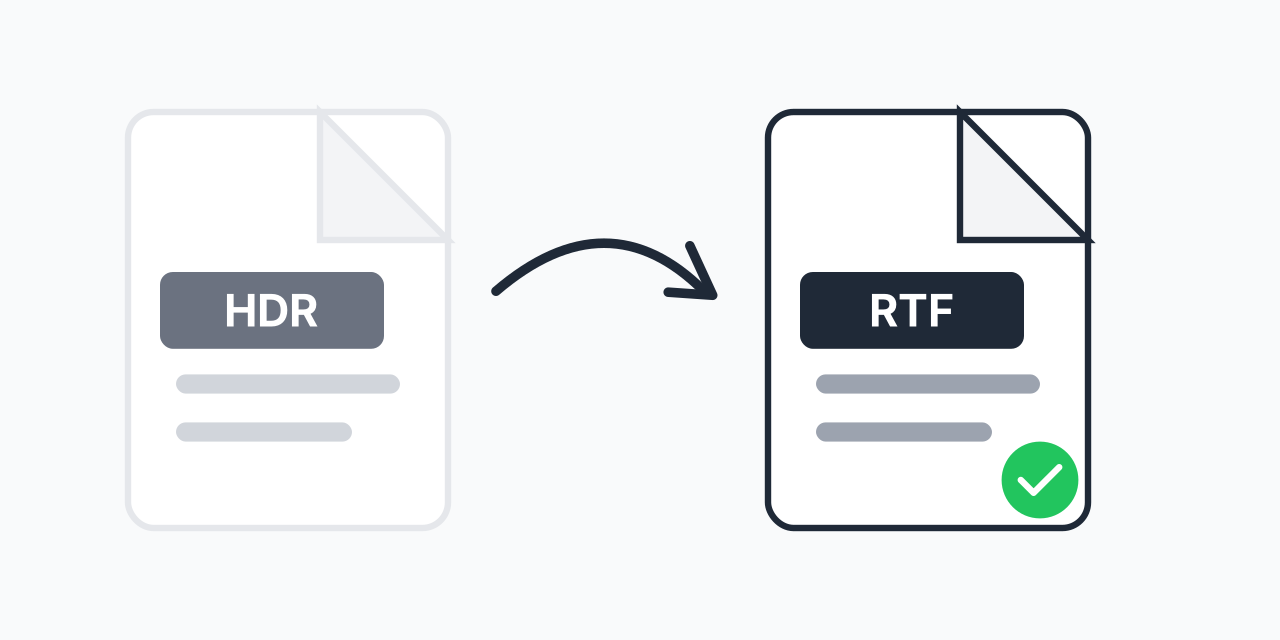
Convert HDR to RTF - Embed High Dynamic Range Images in Documents

Turn Radiance HDR images into portable RTF documents. Open anywhere.

Step 1: Upload your files

You can also Drag and drop files.

Step 2: Choose format
Step 3: Convert files

Read Terms of use before using

Share:fXin@
500+ Formats
Lightning Fast
100% Secure
Always Free
Cloud Processing

Why Convert HDR to RTF?

HDR (High Dynamic Range) files from Radiance software store exceptional lighting data for architectural visualization and scientific imaging. But sharing these specialized files is a challenge-most recipients can't open them without dedicated software.

Converting HDR to RTF embeds your high dynamic range image into a Rich Text Format document that opens on virtually any computer. RTF files work in Microsoft Word, Google Docs, LibreOffice, TextEdit, WordPad, and dozens of other applications across Windows, Mac, and Linux.

If you have other HDR files to work with, our converter handles multiple formats.

How to Convert HDR to RTF

  1. Upload your HDR file - Drag and drop or click to select your Radiance HDR image
  2. Select RTF as output - Choose Rich Text Format from the document options
  3. Download your document - Your HDR image is now embedded in a universally compatible RTF file

The entire conversion happens in your browser. No software to install, no account required.

HDR vs RTF: Understanding the Formats

HDR (Radiance RGBE) is a specialized image format developed by Gregory Ward Larson for the Radiance lighting simulation software. It stores pixels with floating-point precision, capturing a nearly unlimited range of luminance levels. This makes HDR essential for architectural visualization, scientific imaging, and lighting simulations where accurate brightness data matters.

RTF (Rich Text Format) is a document format created by Microsoft in 1987 for cross-platform compatibility. RTF files support text formatting, embedded images, and basic styling while remaining readable by virtually every word processor ever made. In our testing, RTF documents opened correctly on systems dating back 20+ years.

When you convert HDR to RTF, the high dynamic range image gets tone-mapped and embedded into the document, making it viewable without specialized HDR software.

When to Use This Conversion

Sharing Technical Visualizations

You've created lighting simulations or architectural renders in HDR format, but your clients or colleagues don't have HDR viewing software. Embedding the image in an RTF document lets them view your work in any word processor.

Documentation and Reports

Technical reports often need to include HDR visualizations. RTF provides a universally compatible format that preserves your embedded images while allowing recipients to open the document regardless of their software setup.

Archiving with Maximum Compatibility

RTF is one of the most stable document formats for long-term archival. Files created decades ago still open perfectly today. For HDR images you need to preserve alongside documentation, RTF offers exceptional longevity.

Alternative Formats to Consider

RTF works well for universal compatibility, but other options may suit specific needs:

  • HDR to PDF - Better for formal documents, print-ready output, and fixed layouts
  • HDR to JPG - If you just need the image file without document wrapping
  • HDR to PNG - For lossless image quality when transparency matters

Choose RTF when document editability and cross-platform word processor compatibility are priorities.

Works on Any Device

Our HDR to RTF converter runs entirely in your browser:

  • Windows, Mac, Linux, Chromebook
  • Chrome, Firefox, Safari, Edge
  • Desktop, laptop, tablet

No downloads, no plugins, no waiting. Upload and convert instantly.

Pro Tip

RTF documents from the late 1980s still open perfectly today. For long-term archival of HDR visualizations with accompanying documentation, RTF offers better longevity than proprietary formats that may change.

Common Mistake

Expecting the full HDR dynamic range in the document. The conversion tone-maps the image for standard display. If you need to preserve the actual HDR data, keep the original .hdr file alongside the RTF document.

Best For

Sharing architectural lighting visualizations or scientific HDR imagery with clients or colleagues who don't have specialized HDR viewing software installed.

Not Recommended

Don't use RTF if you need the raw HDR data for further editing or rendering. RTF embeds a standard image representation, not the original floating-point HDR data. Keep your source HDR files for technical work.

Frequently Asked Questions

HDR (High Dynamic Range) is a Radiance image format that stores lighting data with floating-point precision. It captures a much wider range of brightness levels than standard images, making it essential for architectural visualization, lighting simulations, and scientific imaging applications.

RTF (Rich Text Format) is a document format developed by Microsoft in 1987 for cross-platform compatibility. RTF files support text formatting and embedded images while remaining readable by virtually every word processor on any operating system.

Converting HDR to RTF embeds your high dynamic range image into a universally compatible document. This is useful when sharing technical visualizations with people who don't have HDR viewing software, or when creating documentation that includes HDR renders.

The HDR image gets tone-mapped during conversion to display correctly in standard document viewers. While the full floating-point data range is compressed for display, the visual appearance is preserved in a format anyone can view.

Yes. Upload multiple HDR files and convert them all to RTF documents in a single batch. Each HDR becomes a separate RTF file with the embedded image.

RTF files open in Microsoft Word, Google Docs, LibreOffice Writer, Apple TextEdit, Windows WordPad, and virtually every word processor available. This universal compatibility is why RTF remains useful for document sharing.

RTF offers broader compatibility since it works with older software and systems that may not support newer DOCX files. However, DOCX supports more advanced formatting features. Choose RTF when maximum compatibility matters most.

No. The conversion happens entirely in your browser using local processing. Your HDR files never leave your device, which is important for proprietary architectural visualizations or confidential technical imagery.

We support standard Radiance HDR files with .hdr, .pic, .rgbe, and .xyze extensions. These are the common extensions used by the Radiance lighting simulation software and compatible applications.

Use PDF when you need fixed layouts for printing or formal documents. Use RTF when recipients need to edit the document or when working with older systems. Both embed the HDR image for universal viewing.

Quick access to the most commonly used file conversions.