Need the Older Word Format?
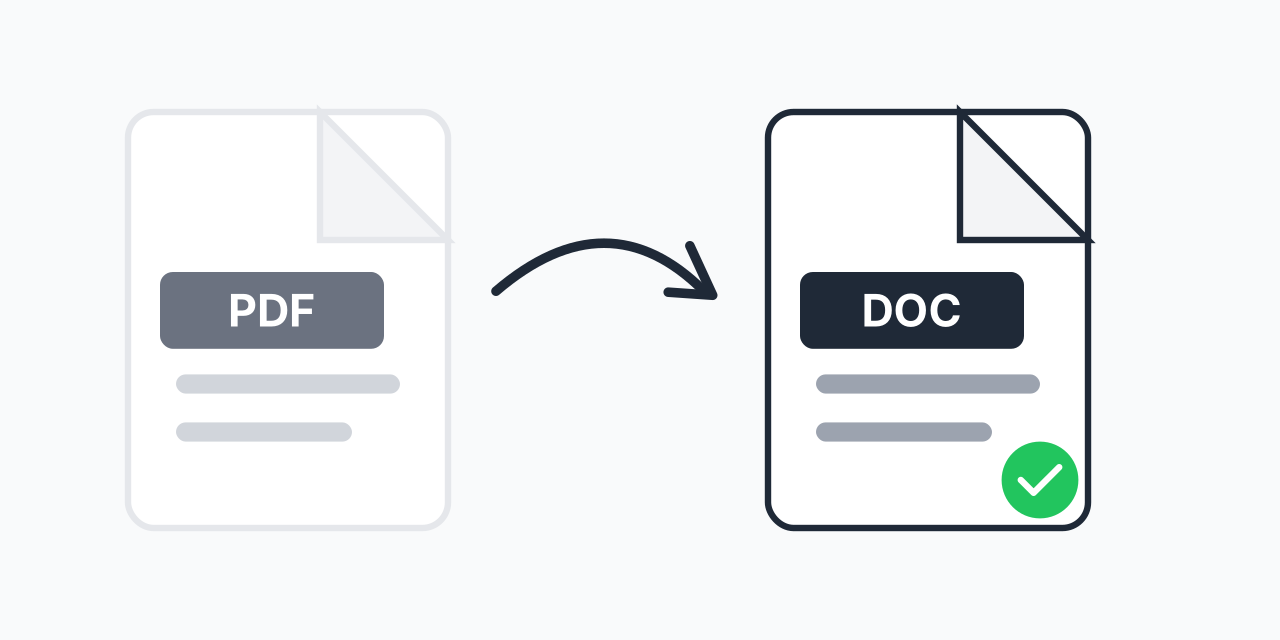
Most PDF converters output DOCX files. But what if your software only accepts the older DOC format? Older versions of Microsoft Word (97-2003), some enterprise systems, and legacy applications require the classic .doc extension.
Converting PDF to DOC gives you an editable Word document that works with virtually any word processor ever made-from Word 97 to the latest versions.
How to Convert PDF to DOC
- Upload your PDF file - Drag and drop or browse to select
- Confirm DOC output - Legacy Word format selected
- Download your file - Get your .doc document instantly
The entire conversion happens in your browser. No software to install, no account to create.
What the Conversion Preserves
When converting PDF to DOC, we maintain:
- Text content - All readable text transfers accurately
- Basic formatting - Fonts, sizes, bold, italic, underline
- Paragraph structure - Headings, line breaks, spacing
- Tables - Rows, columns, and cell content
- Images - Embedded graphics and photos
Complex elements like advanced form fields or embedded JavaScript do not transfer, as DOC format has limited support for these features.
When to Use DOC Instead of DOCX
Legacy Software Requirements
Corporate environments often run older systems. Government agencies, law firms, and enterprise applications may specifically require the DOC format. If a system rejects DOCX files, DOC is your solution.
Maximum Compatibility
DOC files open in every version of Microsoft Word since 1997. They also work in older versions of OpenOffice, WordPerfect, and other word processors that may not support modern DOCX.
Specific Submission Requirements
Some online portals, job applications, and document management systems explicitly request .doc files. Converting your PDF to DOC ensures compliance with these requirements.
DOC vs DOCX: Understanding the Difference
Both are Microsoft Word formats, but they work differently:
- DOC (Binary Format) - Used from Word 97 to Word 2003. Proprietary binary structure. Larger file sizes but universal compatibility with older systems.
- DOCX (XML Format) - Introduced in Word 2007. Open XML-based, smaller files, more features. Standard for modern Word versions.
If you need the modern format instead, use our PDF to DOCX converter. For legacy needs, DOC remains the reliable choice.
Conversion Quality Factors
Results depend on how your PDF was created:
- Text-based PDFs: Convert with high accuracy. Text remains fully editable.
- PDFs from Word: Best results. The document essentially returns to its original form.
- Scanned documents: Appear as images. Require OCR for text extraction.
- Complex layouts: Multi-column designs may need manual adjustment.
In our testing, straightforward documents with single-column text convert nearly perfectly. Complex designs may require light editing after conversion.
Common PDF to DOC Issues and Solutions
Font Substitution
If the PDF uses fonts not installed on your system, Word will substitute similar fonts. The text remains editable, but appearance may differ slightly.
Layout Shifts
PDFs use fixed positioning while DOC uses flowing text. This fundamental difference means some layouts need adjustment. Headers, footers, and text boxes may shift position.
Image Quality
Images transfer at their embedded resolution. Low-resolution images in the PDF will appear the same in DOC. You cannot increase quality beyond what exists in the source.
Opening Your DOC File
After conversion, open your DOC file in:
- Microsoft Word (all versions from 97 onward)
- LibreOffice Writer (free, cross-platform)
- Google Docs (upload and edit online)
- Apple Pages (native Mac support)
- WPS Office (free alternative)
Even modern word processors maintain full support for the legacy DOC format.
Batch Convert Multiple PDFs
Have a folder of PDFs to convert? Upload multiple files and convert them all to DOC format at once. Each file processes independently, and you download them individually or as a combined archive.
Works on Any Device
Convert PDF to DOC directly in your web browser:
- Windows, Mac, Linux, Chromebook
- Chrome, Firefox, Safari, Edge
- iPhone, iPad, Android tablets and phones
No software installation needed. Your files process locally for privacy.