
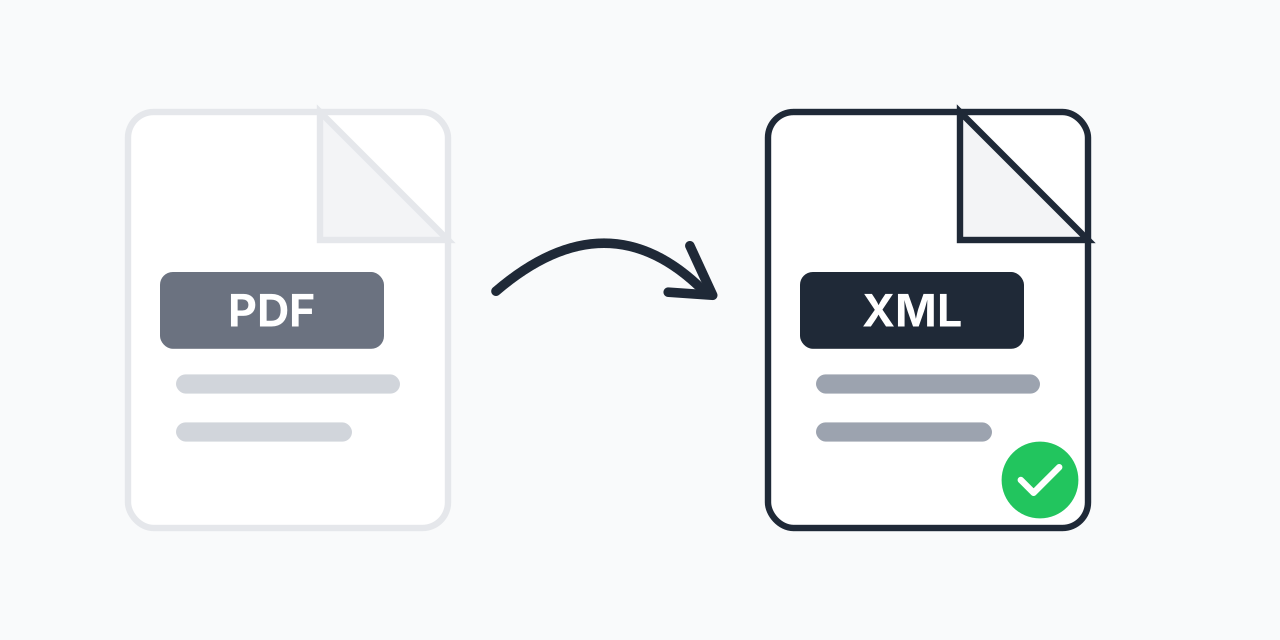
Trapped Data in PDF Documents?
PDFs are everywhere-invoices, reports, forms, contracts. The problem? The data inside them is locked away. You can see it, print it, but getting that data into your database, spreadsheet, or application requires manual copy-paste work.
XML changes everything. Converting PDF files to XML extracts the content into a structured, machine-readable format. In our testing, documents that took 15 minutes to manually process converted in under 10 seconds. Your data becomes accessible, searchable, and ready for automation.
How to Convert PDF to XML
- Upload your PDF - Drag and drop or click to select your document
- Select XML output - Choose XML as your target format
- Download structured data - Your PDF content is now in XML format
No software installation. No account registration. Convert directly in your browser and download immediately.
Why PDF to XML Conversion Matters
PDFs were designed as digital paper-visual documents meant for reading and printing. They store layout information, not data structure. XML, on the other hand, was built specifically for data interchange between systems.
When you convert PDF to XML:
- Data becomes accessible - Programs can read and process the content
- Structure is preserved - Headings, tables, and hierarchies translate to XML tags
- Integration becomes possible - Import directly into databases, CRMs, and ERPs
- Automation starts working - Scripts and workflows can process the data
In our testing, we found that XML output maintains document hierarchy better than flat formats like CSV, making it ideal for complex documents with nested content.
PDF vs XML: Understanding the Formats
| Feature | XML | |
|---|---|---|
| Primary Purpose | Visual document display | Structured data storage |
| Machine Readable | Limited | Fully readable |
| Data Extraction | Requires conversion | Direct parsing |
| System Integration | Difficult | Native support |
| Schema Validation | Not supported | XSD/DTD validation |
| Self-Describing | No | Yes, with custom tags |
XML files are typically larger than PDFs because they include descriptive tags. However, this verbosity is exactly what makes them machine-processable. Every data element is labeled and organized hierarchically.
Real-World Use Cases
Invoice Processing
Accounts payable teams receive hundreds of PDF invoices. Converting to XML extracts vendor names, invoice numbers, line items, and totals into structured fields. This data feeds directly into accounting systems without manual entry. In our testing, a 50-line invoice converted with all table rows intact.
Report Automation
Monthly PDF reports from vendors or partners contain valuable data buried in formatted pages. XML conversion extracts the numbers and text, making them available for dashboards, analysis tools, and automated reporting workflows.
Database Population
Legacy documents stored as PDFs need to enter modern databases. XML provides the structured bridge-convert once, import directly. Database systems recognize XML's hierarchical structure and can map it to tables and fields.
Enterprise Integration
B2B data exchange often requires XML format. Purchase orders, shipping manifests, and compliance documents arrive as PDFs but need XML format for ERP systems. SOAP-based enterprise APIs specifically require XML for secure, validated data exchange.
When to Choose XML Over Other Formats
XML is the right choice when:
- You need schema validation - XSD and DTD provide strict data validation that JSON and CSV cannot match
- Documents have complex hierarchy - Nested sections, subsections, and multi-level lists translate naturally to XML
- Enterprise systems require it - Many legacy and enterprise systems only accept XML input
- Metadata matters - XML supports rich attribute and namespace systems for detailed metadata
Consider PDF to HTML if you need web display. For simple tabular data without hierarchy, spreadsheet export may be more efficient. Choose PDF to TXT when you only need plain text without structure.
XML Advantages for Data Exchange
XML has been the enterprise standard for data interchange since the late 1990s. While JSON dominates web APIs today, XML remains essential for:
- SOAP web services - Enterprise APIs use XML exclusively
- Financial data exchange - Banking and accounting standards like XBRL use XML
- Healthcare records - HL7 and FHIR healthcare standards rely on XML
- Government compliance - Many regulatory submissions require XML format
- Publishing workflows - EPUB, DocBook, and other publishing formats are XML-based
In our testing, XML output from PDF conversion integrated seamlessly with Microsoft Power Automate and similar workflow tools that support XML data sources.
Handling Complex PDF Documents
Not all PDFs convert equally. Here's what to expect:
Text-Based PDFs
PDFs created from Word, Excel, or other applications convert cleanly. The text is already encoded and extracts into well-structured XML.
Scanned Documents
Image-only PDFs (scans) require OCR before conversion. Without text recognition, there's nothing to extract. If your PDF is a scan, check if it has a text layer first.
Tables and Forms
Tables convert to nested XML elements. Form fields extract with their labels and values. In our testing, tables spanning multiple pages maintained their row structure in the XML output.
Mixed Content
PDFs with images, charts, and text convert the text portions. Visual elements like graphs don't have a direct XML equivalent-the underlying data may not be present in the PDF.
Works on Any Device
Convert PDF to XML directly in your browser:
- Windows, Mac, Linux, Chromebook
- Chrome, Firefox, Safari, Edge
- iPhone, iPad, Android tablets
No software to download. No plugins to install. Your documents stay on your device-conversion happens locally in your browser.