
ChangeMyFile - Free Online File ConverterChangeMyFile
Trusted by thousands of users worldwide

Convert TXT to XML - Transform Plain Text Into Structured Data

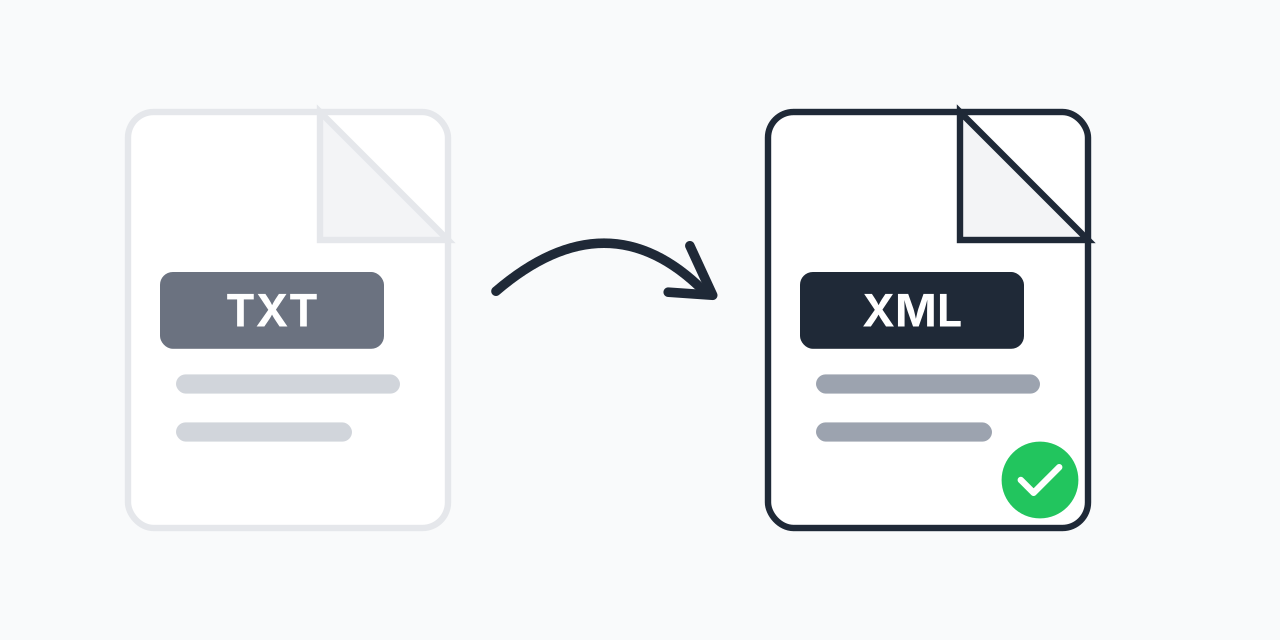
Convert unstructured text files to XML format. Ready for APIs, databases, and automated systems.

Step 1: Upload your files

You can also Drag and drop files.

Step 2: Choose format
Step 3: Convert files

Read Terms of use before using

Share:fXin@
500+ Formats
Lightning Fast
100% Secure
Always Free
Cloud Processing

Why Convert Plain Text to XML?

You have data in a plain text file, but the system you need to feed it into requires XML. This is a common situation when working with APIs, databases, configuration files, or data imports.

Plain TXT files are simple and universal, but they lack structure. XML adds the tags, hierarchy, and formatting that machines need to understand your data. In our testing, converting to XML made previously unusable text data immediately compatible with enterprise systems.

How to Convert TXT to XML

  1. Upload your TXT file - Drag and drop or click to select your text file
  2. Confirm XML as output - XML is selected for structured data output
  3. Download your XML - Your structured file is ready for use

The conversion happens in your browser. Your data stays on your device throughout the process.

TXT vs XML: Key Differences

Understanding when to use each format helps you make the right choice:

  • Structure - TXT has none; XML uses tags to organize data hierarchically
  • Machine readability - TXT requires custom parsing; XML has standardized parsers
  • Flexibility - TXT is human-friendly; XML is both human and machine readable
  • Validation - TXT has no validation; XML can be validated against schemas
  • File size - TXT is minimal; XML adds overhead from tags but gains structure

XML is the better choice when data needs to be processed by other systems or shared between applications.

Common Use Cases

API Data Preparation

Many web services and APIs expect XML input. Converting your text data to XML format makes it ready for system integration without manual reformatting.

Database Imports

Importing data into databases often requires structured formats. XML provides the clear field definitions that database import tools expect.

Configuration Files

Application settings often use XML format. Converting text-based configs to XML makes them compatible with enterprise software systems.

Data Exchange

Sharing data between different platforms works better with XML. The structured format ensures recipients can parse the data correctly regardless of their system.

When to Choose a Different Format

XML is powerful but not always the best choice. Consider alternatives:

  • TXT to CSV - Better for tabular data going into spreadsheets
  • TXT to HTML - Better for web page content display
  • TXT to PDF - Better for document sharing and printing

Choose XML when you need hierarchical structure, schema validation, or compatibility with enterprise systems.

Browser-Based Conversion

Our converter works entirely in your browser:

  • Windows, Mac, Linux, Chromebook
  • Chrome, Firefox, Safari, Edge
  • No software to install
  • No account required

Processing happens locally, so your text content remains private throughout the conversion.

Pro Tip

XML supports custom tag names, so structure your converted data with meaningful element names that describe the content. Well-named tags make the XML self-documenting and easier to process in downstream systems.

Common Mistake

Forgetting that XML has reserved characters. Angle brackets, ampersands, and quotes in your text need proper escaping. Our converter handles this automatically to produce valid XML output.

Best For

System integration scenarios where you need to feed text data into APIs, databases, or enterprise applications that expect structured XML input with defined schema.

Not Recommended

Simple note storage or human-only documents. If the file will only be read by people and never processed by machines, XML's overhead adds complexity without benefit. Keep it as TXT.

Frequently Asked Questions

XML (eXtensible Markup Language) is a structured text format that uses tags to organize data hierarchically. It's designed to store and transport data between different systems and is both human-readable and machine-parseable.

Convert TXT to XML when you need structured data for APIs, database imports, configuration files, or data exchange between systems. XML provides the tags and hierarchy that machines need to process your data automatically.

Yes, all your text content is preserved. The conversion adds XML structure and tags around your data without changing the actual content itself.

Yes. Conversion happens entirely in your browser using client-side processing. Your text file is never uploaded to any server, keeping your data private.

TXT is plain, unstructured text with no formatting. XML adds tags to organize data into a hierarchy that both humans and machines can understand. XML enables validation, parsing, and data exchange between systems.

Yes. You can upload multiple text files and convert them all to XML format in a single batch. No need to process files one at a time.

Any device with a modern web browser works. This includes Windows, Mac, Linux, Chromebook, iPhone, iPad, and Android devices. No software installation needed.

Use CSV when your data is tabular (rows and columns) and going into spreadsheets or databases that prefer comma-separated values. Use XML when you need hierarchical structure, nested data, or enterprise system compatibility.

Yes. XML files are plain text with markup tags, so any text editor can open them. Specialized XML editors or IDEs provide syntax highlighting and validation features for easier reading.

Quick access to the most commonly used file conversions.