
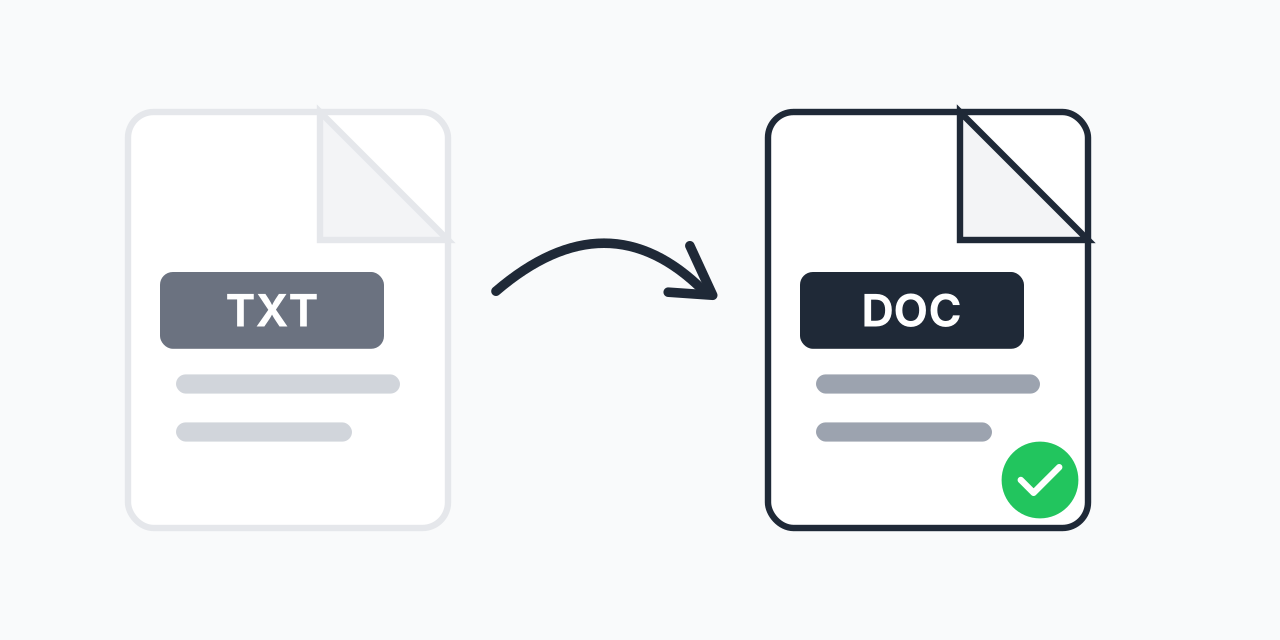
Need More Than Plain Text?
Plain text files (.txt) are great for simplicity, but they lack formatting entirely. No bold text, no headings, no bullet points, no tables. When you need to present information professionally or add structure to your content, converting to DOC format opens up a world of possibilities.
Microsoft Word's DOC format supports fonts, styles, colors, images, tables, headers, footers, and much more. In our testing, converting a simple TXT file to DOC takes just seconds, and you immediately gain access to all of Word's formatting tools.
How to Convert TXT to DOC
- Upload your TXT file - Drag and drop or click to select your plain text file
- Select DOC format - Choose Microsoft Word Document as your output
- Download your DOC - Get your Word document ready for formatting
Your text content transfers completely. Once in DOC format, open it in Microsoft Word, Google Docs, or any word processor to add formatting.
Why Convert TXT to DOC?
While TXT files serve their purpose for basic text storage, DOC format offers significant advantages:
- Professional formatting - Add headings, bold, italic, underline, and custom fonts
- Document structure - Create tables, bullet points, numbered lists, and columns
- Visual elements - Insert images, charts, and graphics into your document
- Headers and footers - Add page numbers, dates, and document titles
- Track changes - Collaborate with revision history and comments
TXT files are limited to basic ASCII or UTF-8 characters. DOC files can contain rich content while remaining widely compatible.
Common Use Cases
Professional Reports
Turn raw data exports or log files into formatted reports. Add headers, create tables, and make your information presentable for stakeholders.
Resume Creation
Start with plain text content and convert to DOC for proper resume formatting. Add professional styling that recruiters expect to see.
Academic Papers
Many writing workflows start in plain text editors. Convert to DOC when you need to add citations, footnotes, and proper academic formatting.
Business Documents
Transform meeting notes, project outlines, or draft content into polished documents with your company branding and formatting standards.
TXT vs DOC: Format Comparison
Understanding the differences helps you choose the right format:
| Feature | TXT | DOC |
|---|---|---|
| File size | Minimal | Larger |
| Text formatting | None | Full support |
| Images/graphics | Not supported | Fully supported |
| Tables | Text-only approximation | Native tables |
| Compatibility | Universal | Requires Word processor |
| Spell check | Editor dependent | Built-in |
If you need maximum compatibility with zero formatting, keep your TXT file. For any document requiring professional presentation, DOC is the clear choice.
Alternative Formats to Consider
DOC might not always be your best option. Consider these alternatives based on your needs:
- TXT to DOCX - Modern Word format, smaller files, better compatibility with recent software
- TXT to PDF - When you need a fixed layout that can't be easily edited
- TXT to RTF - Rich text format works across different word processors
DOCX is the current standard for Microsoft Word documents. DOC is the legacy format that maintains compatibility with older versions of Word (pre-2007).
Works in Your Browser
No software installation required. Convert TXT to DOC from any device:
- Windows, Mac, Linux, Chromebook
- Chrome, Firefox, Safari, Edge
- iPhone, iPad, Android tablets
Processing happens directly in your browser. Your files remain private throughout the conversion process.