
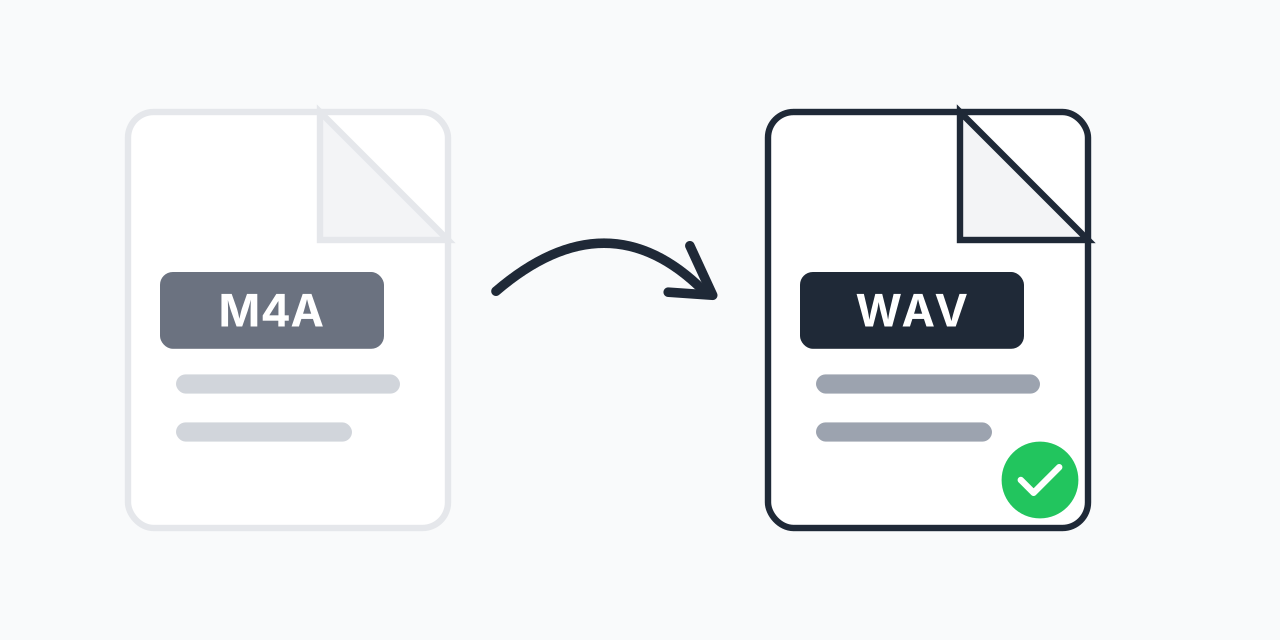
Need Uncompressed Audio from M4A Files?
M4A is a compressed format-efficient for storage but not ideal for audio editing. When you need to edit, mix, or master audio, uncompressed WAV gives your software the cleanest working format.
Converting M4A to WAV extracts the audio into an uncompressed waveform. Your DAW won't waste processing power decoding compressed audio while you work.
How to Convert M4A to WAV
- Upload your M4A file - Select audio from iTunes, Voice Memos, or any M4A source
- Confirm WAV output - WAV provides uncompressed audio for editing
- Download your file - Get WAV ready for import into any audio software
Conversion happens in your browser-no software installation required.
Quality Expectations
Converting M4A to WAV doesn't improve audio quality-it changes the container from compressed to uncompressed.
- What you get: The full audio content of your M4A in uncompressed form
- What you don't get: Recovery of frequencies removed during AAC encoding
- Why it matters: WAV prevents further quality loss during editing and export
For best results, always start with the highest quality source available. If you have the original uncompressed audio, use that instead of an M4A.
M4A vs WAV: Technical Comparison
- M4A - Compressed AAC audio, typically 256kbps, small files
- WAV - Uncompressed PCM audio, 1411kbps at CD quality, large files
- Quality note - WAV from M4A contains the same audio data, just in uncompressed form
- File size - Expect WAV files 5-6x larger than the source M4A
Important: Converting doesn't restore audio data lost during M4A compression. It extracts what's there into an uncompressed format.
When to Convert M4A to WAV
Audio Editing Projects
Audacity, Logic Pro, Pro Tools, and other DAWs work most efficiently with WAV files. Converting M4A sources to WAV before importing ensures smooth editing without decode overhead.
Video Production
Premiere Pro and DaVinci Resolve prefer WAV audio. Converting M4A soundtracks to WAV prevents potential sync issues and timeline glitches in complex projects.
Sample Creation
If you're sampling audio for music production, WAV format ensures maximum compatibility with samplers and sample libraries. Most sample formats derive from WAV.
Archiving
WAV is a simple, universally supported format. For long-term storage of important audio, WAV ensures future accessibility without codec dependencies.
Sample Rate and Bit Depth
WAV files can be created at various specifications:
- 44.1kHz / 16-bit - CD quality, standard for music
- 48kHz / 16-bit - Video standard, use for film and video projects
- 48kHz / 24-bit - Professional video production
- 96kHz / 24-bit - High-resolution audio for mastering
Match your output to your project requirements. Higher isn't always better if your source M4A was standard quality.
Batch Convert Multiple Files
Converting an album or project folder? Upload multiple M4A files and convert them all to WAV simultaneously with consistent settings.
Works on Any Device
No software installation needed:
- Windows, Mac, Linux, Chromebook
- Chrome, Firefox, Safari, Edge
- iPhone, iPad, Android