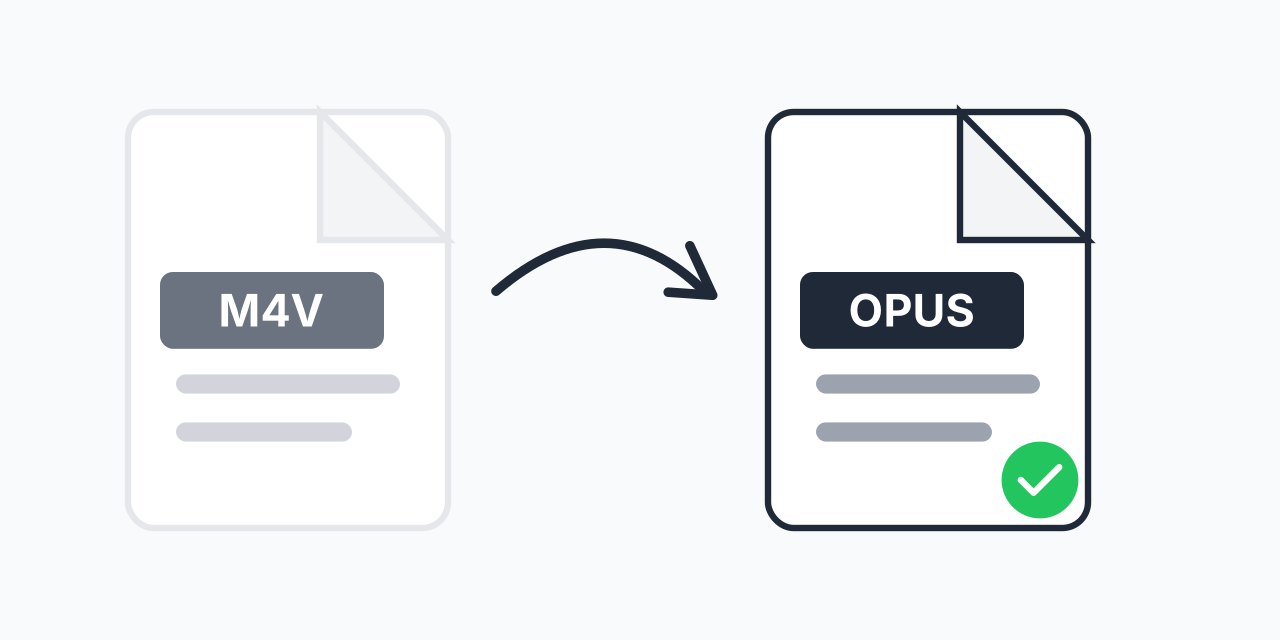
Why Extract Audio from M4V Files?
M4V files are Apple's video container format, commonly used for iTunes purchases, TV shows, and movies. Sometimes you only need the audio - perhaps for a podcast clip, language learning, or creating audio versions of video content.
OPUS is the modern choice for extracted audio. Developed by Xiph.Org Foundation and standardized by IETF, OPUS delivers exceptional quality at lower bitrates than older formats. In our testing, OPUS files at 128 kbps match the quality of 256 kbps MP3 files - cutting your file size roughly in half.
If you have M4V files you need to work with, extracting audio to OPUS gives you maximum flexibility for web streaming, podcasting, and modern audio applications.
How to Convert M4V to OPUS
- Upload your M4V file - Drag and drop or click to select your Apple video file
- Confirm OPUS output - OPUS is selected as your target audio format
- Download your audio - Get your extracted OPUS file instantly
The entire process runs in your browser. No software downloads, no account creation, no waiting in queues.
M4V vs OPUS: Understanding the Formats
M4V is a video container that typically holds H.264 video and AAC audio. It's essentially Apple's version of MP4 with optional DRM protection. When you extract audio from an unprotected M4V, you're pulling out that AAC audio track.
OPUS represents the next generation of audio codecs. Key technical differences:
- Efficiency - OPUS achieves transparency (indistinguishable from source) at 128-192 kbps where MP3 needs 256+ kbps
- Latency - OPUS supports ultra-low latency (as low as 5ms), making it ideal for real-time communication
- Versatility - Works equally well for speech and music, adapting its algorithm on the fly
- Open standard - Royalty-free and supported natively in all modern browsers
For web audio, podcasts, and streaming, OPUS is increasingly the preferred format. It's already the default for WebRTC voice calls and Discord audio.
Common Use Cases
Podcast Production
Creating audio content from video sources is common in podcasting. Extract dialogue from M4V interview recordings or educational videos to repurpose as podcast episodes. OPUS keeps file sizes manageable while maintaining broadcast quality.
Language Learning
Turn video lessons into audio-only files for listening practice during commutes. OPUS files are small enough to store hundreds of hours on your phone without filling storage.
Web Audio Streaming
If you're building a website with audio content, OPUS offers superior compression for faster loading. Convert your M4V source material and serve OPUS to reduce bandwidth costs.
Music and Soundtrack Extraction
Extract background music or soundtracks from video files for personal listening. OPUS preserves musical detail better than equivalent-bitrate alternatives.
Choosing the Right Audio Format
OPUS isn't always the answer. Here's when to consider alternatives:
- Need Apple device compatibility? - Try M4V to M4A for native iTunes/iPhone support
- Maximum compatibility? - M4V to MP3 works on every device made in the last 25 years
- Archiving or editing? - M4V to WAV gives you uncompressed audio for editing software
OPUS is best when: you're targeting modern browsers, building web applications, creating podcasts for platforms that support it, or you need the smallest possible files without quality loss.
A Note on DRM-Protected M4V Files
M4V files purchased from iTunes may include FairPlay DRM protection. Our converter works with unprotected M4V files - those from screen recordings, video editors, or DRM-free sources. Protected content will need to be processed through official Apple channels first.
Most M4V files from video editing software, personal recordings, or web downloads are unprotected and convert without issues.
Works in Any Browser
Convert M4V to OPUS directly in your web browser:
- Windows, Mac, Linux, Chromebook
- Chrome, Firefox, Safari, Edge
- iPhone, iPad, Android tablets and phones
All processing happens locally. Your video files stay on your device throughout the conversion process.