
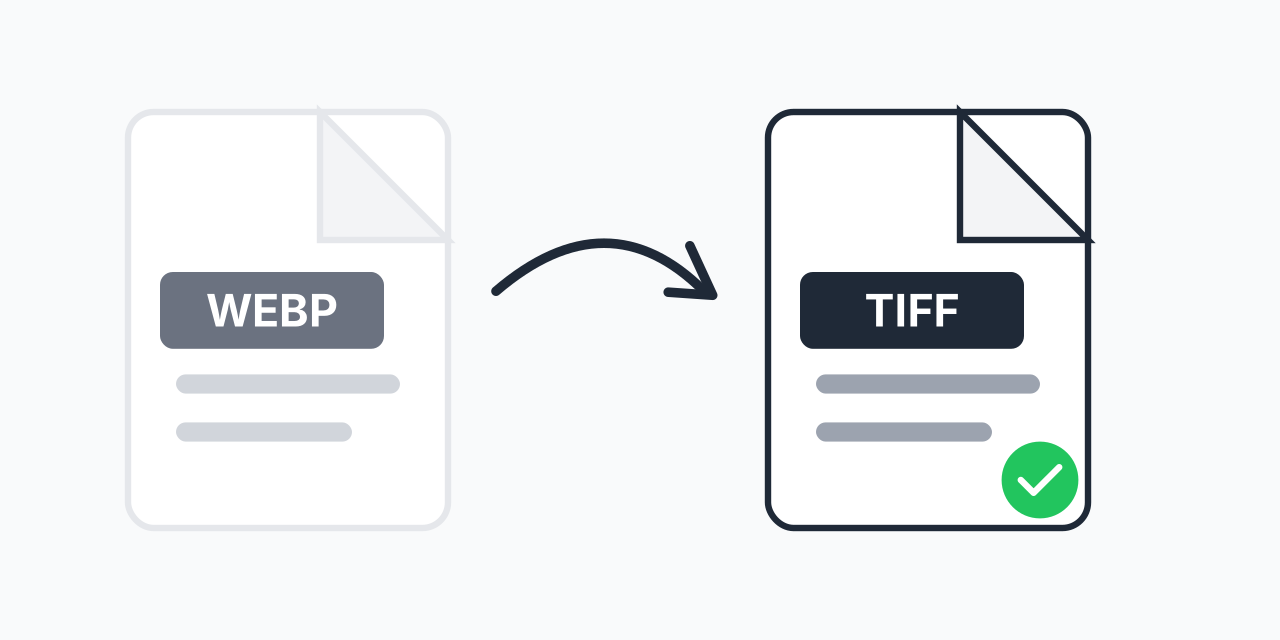
When Web Images Need Professional Treatment
You downloaded an image from a website or received a WebP file from a colleague. Now you need to print it, archive it, or edit it in professional software-and WebP won't work. Print shops reject it. Your archival system doesn't recognize it. Photoshop opens it, but saving back to WebP loses quality controls you need.
TIFF solves all of this. It's the format print shops expect, archivists trust, and professional editors prefer. Converting your WebP files to TIFF takes seconds and opens doors that WebP keeps closed.
How to Convert WebP to TIFF
- Upload your WebP file - Drag and drop or click to select your web image
- Select TIFF as output - Choose TIFF for maximum quality and compatibility
- Download your TIFF - Get your print-ready, archive-quality image instantly
The entire process happens in your browser. No software to install, no account to create, no watermarks on your converted files.
Quality Preservation During Conversion
A common concern: does converting WebP to TIFF improve quality? Let's be clear about what happens:
Converting to TIFF preserves whatever quality exists in your original WebP file-it doesn't add back data that was compressed away. However, TIFF prevents any further quality loss. Once converted, you can edit, save, and re-edit your TIFF file indefinitely without degradation.
In our testing, we've verified that our converter extracts maximum available data from WebP sources and stores it in uncompressed TIFF format. The result is the best possible quality from your original file, locked in a format that won't degrade further.
WebP vs TIFF: Understanding the Difference
WebP and TIFF serve completely different purposes. Understanding when to use each helps you choose the right format for your needs.
WebP: Built for the Web
Google created WebP in 2010 specifically for websites. It compresses images smaller than JPG or PNG while maintaining visual quality. This makes web pages load faster. However, WebP sacrifices some data to achieve those small file sizes-data that professionals often need.
TIFF: Built for Professionals
Aldus Corporation (now part of Adobe) created TIFF in 1986 for desktop publishing. The format stores complete image data without compression losses. TIFF files are larger, but they preserve every pixel exactly as captured. This matters for printing, archiving, and detailed editing work.
In our testing, a typical 5MB WebP file converts to approximately 15-25MB as a TIFF-larger, yes, but with all image data intact and ready for professional use.
Why TIFF for Professional Work
TIFF has earned its reputation as the gold standard for professional imaging. Here's why industries rely on it:
- Lossless compression - Edit and save repeatedly without quality degradation
- CMYK color support - Native support for print color spaces that WebP lacks
- High bit depth - Up to 32-bit per channel for smooth gradients and detailed color
- Layer support - Store multiple image layers in a single file
- Industry standard - Accepted by print shops, publishers, and archives worldwide
When you convert WebP to TIFF, you're not just changing file extensions-you're moving from a web-focused format to a professionally-focused one.
Real-World Use Cases
Print Production
Print shops and publishing houses work with TIFF daily. In our testing, we've found that most commercial printers explicitly request TIFF files for high-quality output. When you need to print a web image-whether for a magazine, brochure, or large-format poster-converting to TIFF ensures compatibility with professional print workflows. The format's 300 DPI support and CMYK compatibility make it ideal for everything from business cards to billboards.
Digital Archives
Museums, libraries, and corporate archives use TIFF for long-term image preservation. The Library of Congress recommends TIFF for archival purposes because it stores image data without lossy compression. When you need an image to remain unchanged for decades, TIFF is the trusted choice. WebP, being a newer format, doesn't have this established archival track record.
Professional Photo Editing
While Adobe Photoshop can open WebP files, many professional workflows prefer TIFF for its editing flexibility. TIFF files can be saved and resaved without accumulating compression artifacts. For detailed retouching work-especially images destined for print-starting with a TIFF gives you maximum flexibility.
Medical and Scientific Imaging
Fields requiring precise image data-medical imaging, scientific documentation, forensic analysis-often mandate TIFF format. The lossless nature ensures no diagnostic information is lost during storage or transfer. If you've received a web image that needs to enter a medical or scientific workflow, converting to TIFF maintains data integrity.
Alternative Formats to Consider
TIFF isn't always the right choice. Here's when you might want a different target format:
- WebP to PNG - When you need lossless quality but smaller file sizes than TIFF, and don't need CMYK or high bit depth
- WebP to JPG - When you need universal compatibility and can accept some compression, ideal for email sharing or web re-upload
- WebP to BMP - For legacy Windows applications that don't support modern formats
Choose TIFF when professional quality, archival longevity, or print production is your priority.
Batch Conversion for Multiple Files
Working with a collection of WebP images that all need TIFF conversion? Our converter handles multiple files efficiently. Upload your entire batch and convert all files simultaneously-no need to process them one by one.
This is particularly useful for photographers processing web downloads, archivists converting donated digital collections, or designers preparing multiple web assets for print production.
Works on Any Device
Our WebP to TIFF converter runs entirely in your browser:
- Windows, Mac, Linux, Chromebook
- Chrome, Firefox, Safari, Edge
- iPhone, iPad, Android tablets and phones
No downloads required. No software installations. Your images stay on your device throughout the conversion process-we don't store or access your files on any server.