
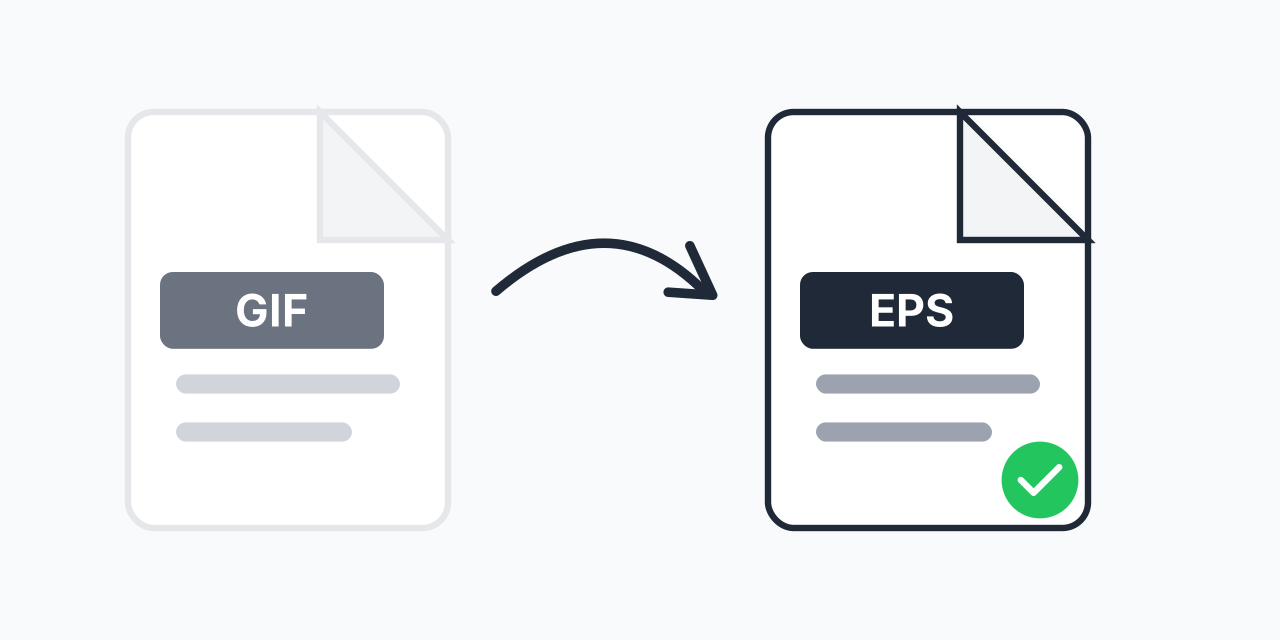
Why Convert GIF to EPS?
Your GIF file works great on websites, but professional printers and design software often require EPS format. GIF is a raster format limited to 256 colors and fixed pixel dimensions. EPS (Encapsulated PostScript) is the print industry standard that works seamlessly with Adobe Illustrator, CorelDRAW, and professional printing equipment.
When you send artwork to a print shop or embed graphics into professional design projects, EPS format ensures compatibility across all systems and produces crisp output at any size. In our testing, EPS files integrated smoothly with both modern design tools and legacy printing equipment that struggled with other formats.
How to Convert GIF to EPS
- Upload your GIF file - Drag and drop or click to select your GIF image
- Confirm EPS output - EPS is selected as the print-ready target format
- Download your EPS file - Ready for professional printing and design applications
The entire process happens in your browser. No software installation, no account creation, no waiting. Your GIF becomes a print-compatible EPS file in seconds.
Quality Considerations
Converting GIF to EPS preserves your original image quality. The GIF's pixel data gets embedded within the EPS container format, maintaining the exact appearance of your source file. However, keep these points in mind:
- Color limitations - GIF's 256-color palette transfers to EPS unchanged. For full-color graphics, consider starting with PNG or JPG instead
- Resolution - The embedded raster data retains its original resolution. A small GIF won't become magically sharper in EPS format
- Animation - EPS doesn't support animation. Only the first frame of an animated GIF converts to EPS
For best print results, start with the highest resolution GIF available. In our testing, GIF files at 300 DPI or higher produced EPS files suitable for professional print applications.
GIF vs EPS: Understanding the Difference
GIF and EPS serve fundamentally different purposes:
- GIF - Raster format with pixels, limited to 256 colors, supports animation, designed for web use
- EPS - Vector-capable format using PostScript, unlimited colors, supports both vector and embedded raster data, designed for print
GIF was created for efficient web graphics in the late 1980s. EPS was developed by Adobe around the same time specifically for the professional printing industry. While GIF excels at small, animated web graphics, EPS became the standard exchange format between designers and print shops worldwide.
In our testing, the same graphic that appeared perfectly sharp in a GIF at web resolution showed visible pixels when enlarged for print. The EPS version maintained clean output regardless of the print size.
When You Need GIF to EPS Conversion
Print Shop Requirements
Many commercial printers specifically request EPS files. The format's PostScript foundation means it communicates directly with professional printing equipment. If your printer asks for EPS, converting your GIF graphics is often the fastest solution.
Adobe Illustrator Projects
When incorporating web graphics into Illustrator projects, EPS provides the cleanest integration. Illustrator was built around EPS in its early versions, and the format remains fully supported for professional design workflows.
Legacy System Compatibility
Older design software and printing equipment sometimes struggle with modern formats but handle EPS reliably. EPS has been the print standard since 1987, making it compatible with virtually any professional graphics system still in operation.
Cross-Platform Design Work
EPS files work consistently across Windows, Mac, and Linux systems. When collaborating with designers or printers using different platforms, EPS eliminates format compatibility concerns that can delay projects.
Alternative Formats to Consider
Depending on your specific needs, other formats might serve you better:
- GIF to SVG - True vector format for web use, ideal if your graphic has simple shapes that can be vectorized
- GIF to PNG - Modern raster format with full color support and transparency, better for web graphics that need more than 256 colors
- GIF to JPG - Widely compatible photo format, useful when you don't need transparency
Choose EPS specifically when working with professional print workflows, Adobe Illustrator projects, or systems that require PostScript compatibility.
Software Compatibility
EPS files open in virtually all professional design applications:
- Adobe Illustrator - Native EPS support with full editing capabilities
- Adobe Photoshop - Opens and rasterizes EPS at your chosen resolution
- CorelDRAW - Complete EPS import and export functionality
- Inkscape - Free, open-source alternative with EPS support
- GIMP - Opens EPS files for raster editing
Most desktop publishing software including Adobe InDesign, QuarkXPress, and Affinity Publisher also import EPS files directly into page layouts.
Batch Conversion for Multiple Files
Have a folder of GIF files that all need EPS conversion? Upload multiple files at once and convert your entire collection in a single batch. This saves significant time when preparing multiple graphics for a print project or updating a library of web assets for professional use.
Each file converts independently, so you can download them individually or all at once when the batch completes.
Works in Any Browser
Convert GIF to EPS directly in your web browser:
- Chrome, Firefox, Safari, Edge
- Windows, Mac, Linux, Chromebook
- iPhone, iPad, Android devices
No plugins, no downloads, no installation. The conversion runs entirely in your browser, so your files stay on your device throughout the process.