Need to Share Illustrator Files Without Adobe?
You have an AI file from Adobe Illustrator, but your client, printer, or colleague uses different software. AI files are Illustrator-specific, and not everyone has access to Adobe's ecosystem.
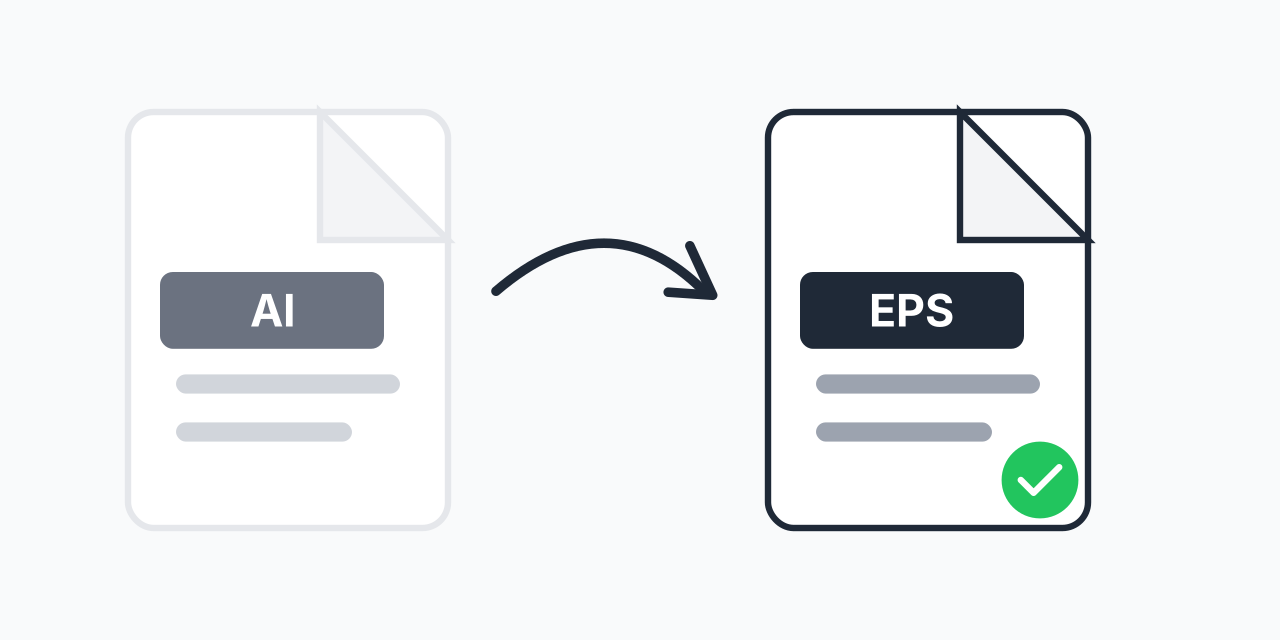
EPS (Encapsulated PostScript) is the universal vector format that works across virtually all design applications. Converting AI to EPS lets you share your vector artwork with anyone, regardless of what software they use.
How to Convert AI to EPS
- Upload your AI file - Select your Adobe Illustrator artwork
- Confirm EPS output - EPS preserves your vectors for universal compatibility
- Download your file - Get print-ready EPS without Adobe software
No Illustrator subscription needed. Convert directly in your browser.
Why Convert AI to EPS?
Universal Software Compatibility
EPS works in CorelDRAW, Affinity Designer, QuarkXPress, InDesign, and virtually every professional design application. AI files require Illustrator or compatible Adobe software.
Print Industry Standard
Many print shops and publishers specifically request EPS files. The format uses PostScript language, which is the foundation of professional printing. Sending EPS eliminates compatibility questions with printers.
Client Handoffs
When delivering logo files or artwork to clients, EPS ensures they can use the files regardless of their software setup. It's the professional standard for distributable vector assets.
Legacy System Support
Older design systems and workflows often require EPS. If you're working with established print operations or publishing houses, EPS is frequently the expected format.
AI vs EPS: Key Differences
Both are vector formats, but they serve different purposes:
- AI (Adobe Illustrator) - Native Illustrator format with full editing capabilities, layers, effects, and Adobe-specific features. Ideal for working files.
- EPS (Encapsulated PostScript) - Universal exchange format based on PostScript. Flattens layers but works everywhere. Ideal for final delivery.
Think of AI as your working source file and EPS as the distributable version. Professional designers often maintain AI files internally while delivering EPS to clients and printers.
What Gets Preserved in Conversion
When converting AI to EPS, your artwork maintains:
- Vector paths - All curves and shapes remain mathematically defined
- Colors - CMYK, RGB, and spot colors are preserved
- Text (as outlines) - Typography converts to paths for consistent rendering
- Gradients and fills - Complex color fills translate properly
Note: Some advanced Illustrator effects may rasterize or simplify. For critical production work, review the output before sending to print.
Common Use Cases
Logo Delivery Packages
When you finalize a logo, clients expect multiple formats. EPS is standard in professional logo packages alongside PNG and PDF versions.
Print Production
Commercial printers often request EPS for signage, packaging, and large-format printing. The PostScript foundation ensures reliable output on professional equipment.
Cross-Platform Collaboration
Working with a team using mixed software? EPS bridges the gap between Illustrator users and those on CorelDRAW, Affinity, or other platforms.
Archival Purposes
EPS has been stable since 1992. For long-term asset archiving, EPS provides format longevity that proprietary formats cannot guarantee.
Batch Convert Multiple AI Files
Need to convert an entire folder of Illustrator files? Upload multiple AI files and convert them all to EPS in one batch. Perfect for preparing logo packages or asset libraries for distribution.
Works on Any Device
Convert AI to EPS directly in your browser:
- Windows, Mac, Linux, Chromebook
- Chrome, Firefox, Safari, Edge
- No software installation required
Especially useful if you don't have Illustrator installed or need a quick conversion without launching heavy design software.