Why Convert MPEG to AAC?
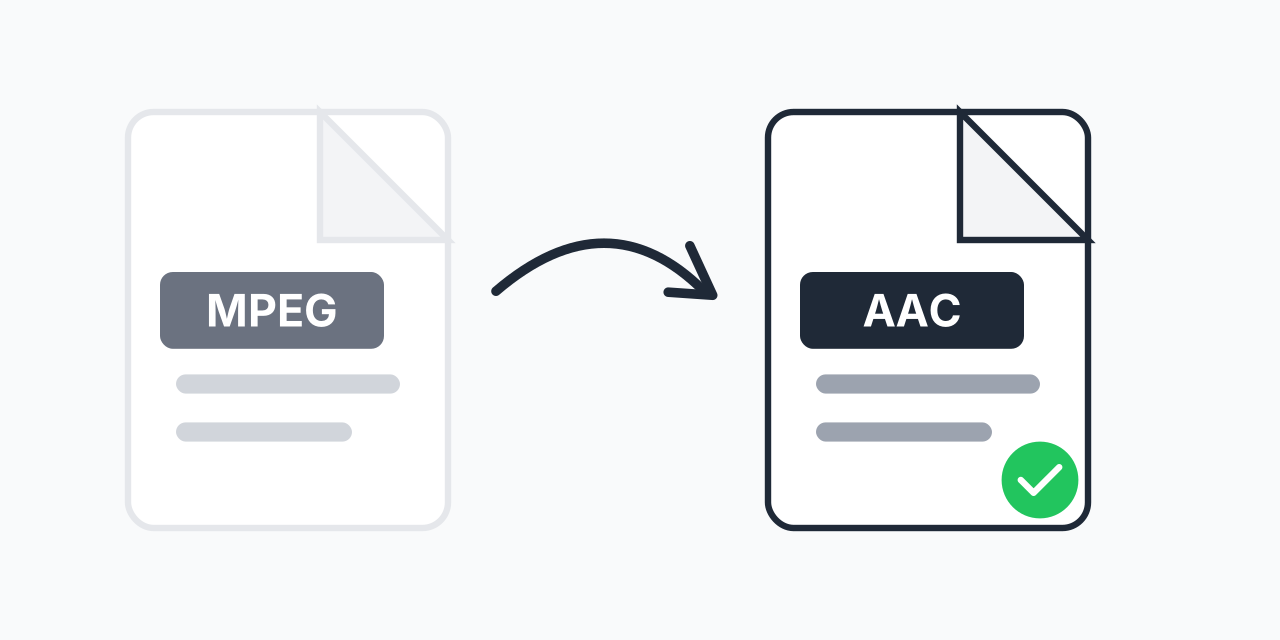
MPEG video files contain both video and audio tracks, but sometimes you only need the sound. Whether it's music from a concert recording, dialogue from a lecture, or audio from a podcast video, converting MPEG files to AAC gives you the audio in a modern, efficient format.
AAC (Advanced Audio Coding) was designed as the successor to MP3 and delivers better sound quality at smaller file sizes. It's the default audio format for Apple devices, YouTube, and most streaming services. When you extract audio to AAC, you get a high-quality file that works seamlessly across modern platforms.
How to Convert MPEG to AAC
- Upload your MPEG file - Drag and drop or click to select your video
- Choose AAC as output - Select AAC from the audio format options
- Download your audio - Get your AAC file ready for playback
The entire conversion happens in your browser. No software installation needed, no account required. Upload, convert, and download in seconds.
MPEG vs AAC: What's the Difference?
MPEG and AAC serve completely different purposes in the multimedia world:
- MPEG - A video container format holding both video and audio tracks, common in older video files and DVD recordings
- AAC - A modern audio-only format optimized for efficient compression while maintaining excellent sound quality
When you convert MPEG to AAC, you extract the audio track and discard the video portion. The result is a dramatically smaller file containing just the sound. In our testing, a 150MB MPEG video converted to an 8MB AAC file with the audio quality remaining virtually indistinguishable from the original.
Why Choose AAC Over MP3?
AAC offers several advantages compared to the older MP3 format:
- Better compression - Same quality at 25-30% smaller file sizes than MP3
- Superior sound quality - Clearer audio at equivalent bitrates
- Modern standard - Default format for iPhone, iTunes, YouTube, and streaming
- Efficient encoding - Preserves more audio detail during compression
For most users, AAC is the better choice unless you need compatibility with very old devices that only support MP3. If maximum compatibility is your priority, consider MPEG to MP3 conversion instead.
Common Use Cases
Music from Video Recordings
Downloaded a live performance or music video? Extract the audio track to AAC for your music library. AAC files work perfectly with Apple Music, Spotify uploads, and all modern music players.
Lecture and Presentation Audio
Video lectures are easier to consume as audio files. Convert to AAC and listen during commutes or workouts without staring at a screen. The compact file size makes it easy to store entire course libraries.
Podcast Content
Some podcasts distribute video versions. Extract the audio as AAC for standard podcast app compatibility. AAC is the preferred format for podcast distribution due to its quality-to-size ratio.
Audio Quality and File Size
AAC delivers excellent audio quality while keeping files small. The format uses psychoacoustic modeling to remove sounds humans can't perceive, resulting in efficient compression without noticeable quality loss.
The audio quality of your converted file depends on the source MPEG video. If the original has high-quality audio, your AAC extraction will sound excellent. We use optimal encoding settings to preserve the best possible sound from your source material.
Device Compatibility
AAC enjoys broad support across modern devices and platforms:
- Apple ecosystem - Native support on iPhone, iPad, Mac, Apple TV
- Android devices - Full playback support since Android 3.1
- Windows - Supported in Windows Media Player and all modern apps
- Streaming services - Standard format for YouTube, Spotify, Apple Music
- Gaming consoles - Supported on PlayStation and Nintendo devices
For professional audio editing requiring uncompressed formats, consider MPEG to WAV conversion. WAV preserves all audio data but creates significantly larger files.
Works in Any Browser
Convert MPEG to AAC directly in your web browser:
- Windows, Mac, Linux, Chromebook
- Chrome, Firefox, Safari, Edge
- iPhone, iPad, Android phones and tablets
No downloads or installations needed. The conversion runs locally in your browser, keeping your files private on your device throughout the process.